

Can a ball valve for gas be used in a gas system with a low - pressure drop requirement?
Sep 22, 2025
Hey there! As a supplier of ball valves for gas, I often get asked a really important question: Can a ball valve for gas be used in a gas system with a low - pressure drop requirement? Well, let's dig into this topic and find out.
First off, let's understand what a low - pressure drop means in a gas system. Pressure drop is basically the loss of pressure that occurs as gas flows through a valve or any other component in the system. In a system where a low - pressure drop is required, we want the valve to allow gas to flow through with as little resistance as possible. This is crucial because excessive pressure drop can lead to inefficiencies, increased energy consumption, and even potential malfunctions in the gas - using equipment.
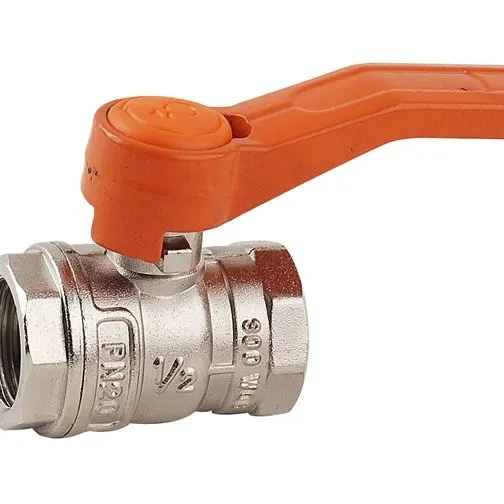
Now, let's talk about ball valves for gas. These valves are pretty popular in gas systems for a bunch of reasons. They're known for their durability, reliability, and tight shut - off capabilities. A ball valve has a spherical disc (the ball) with a hole in the middle. When the valve is open, the hole aligns with the flow path, allowing gas to pass through easily. When it's closed, the solid part of the ball blocks the flow completely.
So, can they work in low - pressure drop systems? The answer is yes, but it depends on a few factors.
One of the key factors is the valve size. If you choose a ball valve that's too small for the gas flow rate in your system, it's going to cause a significant pressure drop. Think of it like trying to force a large amount of water through a tiny straw. The water (or in this case, gas) will encounter a lot of resistance, and the pressure will drop. On the other hand, if you select a ball valve with an appropriate size that matches the flow requirements of your system, the pressure drop can be minimized.
Another important factor is the valve design. Some ball valves are designed with a full - port or full - bore design. In a full - port ball valve, the hole in the ball is the same size as the pipe diameter. This means that there's very little restriction to the gas flow, resulting in a low - pressure drop. For example, our Pn40 Brass Ball Valve is available in full - port designs, which makes it a great option for gas systems with low - pressure drop requirements.
The material of the ball valve also plays a role. Different materials have different surface smoothness and internal geometries, which can affect the flow characteristics and pressure drop. For instance, brass ball valves are known for their smooth internal surfaces, which help reduce friction and pressure drop. Our brass ball valves are carefully crafted to ensure optimal flow and minimal pressure loss.
PPR ball valves are another option. They're lightweight, corrosion - resistant, and offer good flow characteristics. If you're looking for a cost - effective solution for your gas system, our PPR Ball Valve might be a great choice. The internal structure of PPR ball valves is designed to provide a relatively low - pressure drop while maintaining reliable performance.
Copper gas ball valves are also popular in many gas applications. Copper is a great material because it's highly conductive, resistant to corrosion, and has a smooth interior surface. Our Copper Gas Ball Valves are engineered to provide excellent flow control with minimal pressure drop.
But it's not just about the valve itself. The installation of the ball valve also matters. If the valve is installed incorrectly, it can cause turbulence in the gas flow, leading to an increased pressure drop. Make sure the valve is properly aligned with the pipes and that there are no obstructions or bends in the immediate vicinity of the valve.
It's also important to consider the maintenance of the ball valve. Over time, dirt, debris, or corrosion can build up inside the valve, which can increase the pressure drop. Regular maintenance, such as cleaning and lubrication, can help keep the valve in good working condition and ensure a low - pressure drop.
In some cases, you might need to do some calculations to determine the exact pressure drop that a ball valve will cause in your system. There are various formulas and software tools available that can take into account factors like valve size, flow rate, gas properties, and pipe dimensions. If you're not sure how to do these calculations, don't worry. Our team of experts can help you with that.
So, in conclusion, ball valves for gas can definitely be used in gas systems with low - pressure drop requirements. By choosing the right valve size, design, and material, and ensuring proper installation and maintenance, you can achieve a low - pressure drop and efficient gas flow in your system.
If you're in the market for a ball valve for your gas system, whether it's for a low - pressure drop application or not, we're here to help. We offer a wide range of high - quality ball valves that are designed to meet the diverse needs of our customers. Our valves are rigorously tested to ensure they meet the highest standards of performance and safety.
If you have any questions or want to discuss your specific requirements, feel free to reach out to us. We'd love to have a chat with you and help you find the perfect ball valve for your gas system. Let's work together to make your gas system more efficient and reliable.

References
- Valve Handbook, by J. S. Kehl
- Gas System Design and Installation Guide, by the Gas Technology Institute