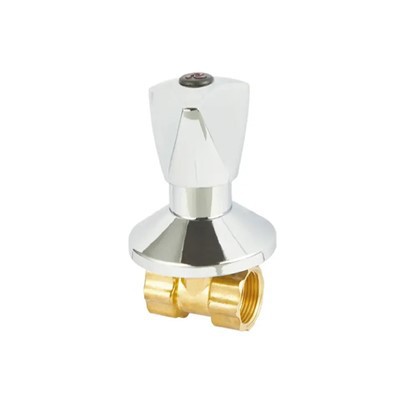
Q: How does Stop Valve work?
A: Water valve shut-off types are all designed to stop the flow of water. Several considerations dictate which is the best water shut-off valve for your needs, including the size of the inlet diameter and outlet diameter, as well as how the valve is operated.
Multi-turn shut-off valves have a handle that, when tightened, forces a rubber gasket onto a seat in the middle of the valve that restricts water. Loosening the multi-turn handle allows water to flow through the valve.
Quarter-turn valves are also operated by a handle on the valve stem. Twisting the handle pivots a steel ball with a hole drilled through its center. Water flows through the hole in the open position, parallel to the supply line, but it stops when the handle makes a quarter-turn in the other direction. Quarter-turn valves tend to be more expensive but more reliable than multi-turn valves.
Shut-off valve types also differ by configuration.
On a straight stop valve, the inlet and outlet are aligned. Straight valves are typically found where the supply line comes through the floor.
On an angle valve, the outlet is at a 90-degree angle from the supply line. Angle valves are used on supply lines that come from the wall.
Q: How to connect Stop Valve?
A: The types of water shut-off valves connect to supply lines in different ways, often dictated by the material of the connecting pipe.
PEX supply lines can use shut-off valves with barbed, compression or push-to-connect (PTC) fittings. Barbed fittings require the use of a crimp ring and a crimping tool to create a tight seal. Compression fittings can be connected using common homeowner tools. Push-to-connect fittings do not require any special installation tools.
Copper supply lines can accommodate compression, PTC and sweat fittings. Sweat fittings must be soldered onto copper pipe.
CPVC supply lines can use valves with threaded or PTC connections.
Galvanized steel pipes can use valves with FIP (female iron pipe) connections that simply screw onto the supply line.
Tip: Beginner DIY homeowners may want to hire a professional to install sweat fittings that require using solder and flux with a propane torch to form a connection.
Q: Where can the Stop Valve be installed?
A: Individual water shut-off valves can be found underneath or behind fixtures and appliances throughout your home. These stop valves can make small repairs or the installation of replacement fixtures much more efficient.
Inside the house, the main water shut-off valve is usually located along the perimeter of the home on the side that faces the street. If you have a basement, find the water distribution system and trace it back to an exterior wall. For homes without basements, the main water valve might be concealed behind an access panel. These can be useful if your neighborhood has a water supply issue or if you need to shut off the water to the home for some other reason.
The valve may have a multi-turn handle similar to an outdoor hose faucet or a single lever control. In either case, turning the handle will stop water from entering the house. Single lever controls offer the advantage of letting you know by sight if the handle is off or on.
Outside water meters are typically found along the curb and sidewalk of your home, within your property lines. You may have to dig a little to uncover it and sometimes they may hide close to shrubs. After discovering your meter's location, carefully lift the top off. The water valve is located between the meter face and the curb. After you clear any dirt or debris off the valve, you’ll see an arrow on the top that displays the direction of the flow of water. It takes a fair bit of leverage to turn off the valve and the water shut off key provides that. Use your water shut off key to slowly turn the valve until the arrow is pointed at the curb. When the arrow is pointed at the curb, the water has been shut off.
Tip: Every resident in a home should know where to find the main water shut-off valve and how to turn off water in case of an emergency. Water gushing from a broken or frozen pipe can cause substantial damage inside the dwelling. A curb key is a handy tool to have when shutting off the street level water main.
Q: When To Use An Angle Stop Valve Vs. A Straight Model?
A: Check out where the stub-out for the water supply line currently sits in the bathroom. Supply lines installed into the wall require an angle stop valve since the valve has to connect to the pipes running through the wall — providing the angle needed to direct the water toward the fixture. Straight stop valves are for fixtures with supply pipes that run directly through the floor. Angle stop valves are available in a wide range of arrangements, including double handle and three-way angle stops to control multiple fixtures.
Don’t wait until an angle stop valve is seized in one position or leaking to replace it. Since this valve is only used in emergencies, keeping it working properly is essential but often forgotten. These valves are only designed to last about a decade. The internal parts designed to hold the water supply back wear out over time, even when not used. Low quality angle stop valves are often ruined by a single-use valve and need replacement regularly. Install a new premium quarter-turn angle stop valve to ensure there’s no rupture or failure to cut off the water when you need it the most.
Q: How to install Stop Valve?
A: Valve type: Whether installed in an existing or new system, choose an angle stop valve that fits the system's requirements. For example, choose an angle stop ball valve for a residential or commercial system. Choose a compression angle stop valve if working with copper or PEX tubing.
Valve location: In residential and commercial systems, angle stop valves should be installed where water pipes come out of walls to connect with fixtures. Typically, these valves are found under sinks, behind toilets, and at the water supply for washing machines. For industrial systems, install the angle stop valve in areas where isolation may be necessary in the future or where pressure needs to be limited.
Accessibility: When choosing the installation location, ensure that the valve will be easily accessible in case of an emergency.
Installation instructions: The instructions for installing an angle stop valve vary depending on the type of valve and where it will be used. For example, push-fit angle stop valves require the pipe to be inserted into the valve, whereas sweat angle stop valves require soldering. Before selecting a valve, understand the installation requirements to ensure they are feasible for the application.
Local codes: Check with and understand local regulations around installing angle stop valves. While the process may seem simple, sometimes local regulations can complicate matters.
Valve material: Select the valve body and seal material to handle the application's specific media. PVC and brass valves are suitable for drinking water, and EPDM seals are preferred. If the media is corrosive, stainless steel may be a better choice for the body, and the valve's seal material can be determined by reviewing our chemical resistance guide.
Q: What types of Stop Valve are there?
A: Ball Valve
A ball valve is a large metal valve usually with a lever handle. It is designed to quickly turn off water, as the valve opens and closes completely with a short 1/4 turn of the handle. It can be purchased with a standard port (the valve is smaller than the pipe diameter) or a full port (the valve is the same as the pipe diameter). And it's inexpensive and durable.
This type of water shutoff valve is often seen at the main water shutoff for the home. You can recognize it because the body of the valve below the handle will usually have a thicker middle section where the ball inside fits. The internal ball has a hole through its center. When the valve is open, the hole is aligned with the direction of the water pipe, allowing water flow. When the handle is closed, the ball rotates 90 degrees, so the hole in the ball is blocked.
Gate Valve
A gate valve describes the mechanism by which the valve is opened and closed. To turn a gate valve on or off, a circular handle is turned to raise or lower a metal gate inside the valve body. When the valve is off, the gate blocks the flow of water. Just like the ball valve, a gate valve is a large metal valve. And it can be used not only to stop water flow altogether but also to reduce it.
Gate valves are somewhat unusual in residential plumbing and are more common in industrial applications. But you might find one controlling your main water pipe or on another major water pipe. Sometimes they are found on the pipe leading to a hot water boiler. They are relatively durable and can range widely in cost from affordable to pricey.
Globe Valve
From the outside, a globe valve resembles a ball valve with a slightly bulbous metal body. And while it can be pricey, it's a durable water shutoff valve. Inside the globe valve, there is a baffle with a water flow port running through it. The handle operates a plunger with some sort of washer or seal on the bottom. As the handle closes the valve, the plunger moves down against the water-flow port and closes it off. When the handle is operated, you can often feel the plunger tighten down inside the valve.
A globe valve is used in situations where the flow of water might need to be controlled variably. It's often found controlling pipes that lead outdoors to water spigots but also can be found anywhere a branch of the plumbing line has a shutoff.
Angled Fixture Shutoff Valve
Fixture shutoff valves can take many appearances, but a common one is a small silver valve with an oval handle with ribbed edges for gripping. An angled fixture shutoff valve, in particular, is used when a water pipe comes out of the wall and needs to angle straight upward to feed supply tubes running to tailpieces on a sink faucet or toilet valve. You likely will have quite a number of these valves in your home. They are inexpensive and relatively durable.
Internally, fixture shutoff valves might use a compression stem (you will feel a squeeze when closing the valve), but more common is a style that uses a small ball inside. They are available in styles that can be soldered onto copper pipes or solvent-glued onto plastic pipes. More common are compression fittings that slip over the pipe and are tightened down in place. There are also "grip-fit" types that simply slide onto the end of a water pipe and seal by means of an inner gasket.
Straight Fixture Shutoff Valve
A close relative of the angled fixture shutoff is a straight shutoff valve, which operates the same way but is intended for use where the water flow can run straight to the fixture. It's often used where a water pipe comes up out of the floor rather than out from the wall.
Like the angled fixture shutoff valve, it is inexpensive and somewhat durable. And it's made of metal with a small handle that allows you to easily open or close off the flow of water.
Stop-and-Waste Valve
A stop-and-waste valve is a key irrigation fitting to help keep sprinkler lines from freezing in the winter. It's made of metal and has two openings: one to open and close the flow of water (stop) and the other to allow water to drain from the line (waste).
For a sprinkler system, the valve is buried in the ground below the freeze line and turned on and off with a special key. When it's turned off, the waste hole opens to allow the line to drain. These valves are moderately expensive and durable as long as they are buried appropriately.
Needle Valve
Although no longer allowed by building codes in many areas, your home might have one or more needle valves, also called saddle valves. These are normally used to connect a water supply tube to a refrigerator, water filter, or other appliance. They work by clamping onto a water pipe and then forcing a hollow needle into the pipe to tap the water. A flexible copper or plastic supply tube is connected to the fitting on the valve to bring water to the appliance.
Needle valves are not regarded as very dependable or durable valves, and they can range widely in cost. Most codes now require that this kind of connection be made with a standard fixture shutoff valve instead.
Q: How to replace Stop Valve?
A: Turn off Your Water
Before you do any work on your plumbing, make sure you know where the main shutoff valve for your home’s water supply is located. Once you turn off the main water supply, turn on a faucet on the lowest level of your home to drain the pipes.
The next thing to do is unscrew the water supply line from the old valve, if you’re replacing it, or the main water pipe if you’re installing a shutoff valve in a new location. Now you’re ready to work.
Removing Old Valves
If you’re replacing an old, leaky valve on copper pipes, you’ll need to figure out what type of connection it has so you can remove it. If the old valve is soldered on, you’ll need to cut the valve off by cutting through the pipe with a pipe cutter. Be sure to leave yourself enough pipe remaining between the wall and the end of the pipe to install the new valve. (As with all home improvement projects, these kinds of tasks require knowledge and skill that can seem risky without prior practice; if cutting the pipe seems like something a little more permanent than you’re prepared to experiment with on your own home, don’t hesitate to call a professional.)
If it’s a compression valve, hold the valve with a pipe wrench while you use a wrench to unscrew the nut. Once it’s unscrewed, the old valve will slide off. The nut and ferrule that held it in place can be reused with a new compression valve, but that runs the risk of any existing leaks continuing with the new valve.
The easiest way to remove the ferrule and nut from the pipe is with a tool called a sleeve puller, which screws onto the pipe exactly as the valve would, and then pulls the ring and nut off the pipe with a few turns of a wrench. You can also remove the old ferrule with a pair of wrenches by prying it off the pipe, which is just as effective, but may take a bit more work. Either way, you are left with a length of pipe ready for a new valve.
Selecting a New Shutoff Valve
The best types are quarter-turn shutoff valves, as these shut off with a single quarter turn. That way, if you’re having a plumbing emergency (such as flooding) you can cut the water supply quickly and easily. Besides being a quarter-turn valve, it must fit the type of pipes you have and connect easily to the supply line by having an outflow connection in the correct orientation. If you’re replacing an old valve, you may just want to replace the kind you have.
If you have copper pipes you can use a compression valve, which will connect to your pipe with a brass ferrule and a nut. It can be installed with some pliers and a wrench, so it’s usually an easier option than a sweat valve, which needs to be soldered to your copper pipe with special soldering tools. Iron pipes are often threaded, so you’ll want to get a screw on valve. PEX and PVC pipes require valves designed specifically for them.
The push-fit valve can be slightly more expensive but also easier to work with. These fit every type of pipe and require no tools for installation. As the name implies, a push-fit valve pushes on to the end of the pipe and a built-in gasket fits snug around the pipe to hold it in place. They are only slightly more complicated to remove than to install, and require a little extra space between the valve and the wall than a compression valve might, but are easy to work with and a solid option for most plumbing jobs.
The arrangement of your water pipes and your fixture will determine whether you need a valve with the inlet and outlet connection in a straight line or at a 90 degree angle to each other. If you’re installing one for your kitchen sink, you may want a three-way valve, which has outlets to your kitchen sink and your dishwasher. Be sure to consider where you’re installing the pipe and plan ahead for the different fittings that might be needed.
Installation
Your main water valve has been shut off, your pipes drained, and you’ve picked up a new valve so you’re ready to begin. Make sure you have all the tools you’ll need handy. Depending on whether you’re removing and installing or just installing, and the type of connection you’re installing, you may need: a pipe wrench, wrench, pliers, pipe cutter, and/or a ferrule puller.
Once you have removed the old valve, installing the new one will seem like a familiar process. Attach the new valve to the pipe and (depending on the type of valve you chose, of course) use the wrench to be sure it is seated correctly and securely.
Once the valve is in place, reattach the supply line. Check that the fittings are snug with the help of a wrench, then turn your main water valve back on. Turn on a faucet to get air out of the pipes and get water flowing normally again. Check your newly installed valve to make sure it works and test it for any leaks. Finally, once everything is in working order, congratulate yourself for a job well done.
Q: How to Select Parts of a Valve Correctly?
A: Properly selecting valve components requires careful consideration of the service conditions, performance requirements, and desired valve type. Here are some important considerations when choosing valve parts:
For welding end valves, ensure the valve-body ends and weld joint design suit the piping system and materials. Flow mediums that require tight shutoff may need metal-seated ball valves with properly matched stem threads, outside screw and yokes that prevent side loading. High pressure applications need sturdy valve bonnets, thick stem packing in the stuffing box, and sturdy yoke bushings.
Relief valves require precise trim parts and trim designs to provide accurate pressure control. Ball valves used for throttling duties require characterized ball and seats to control flow. The rotational motion of ball and plug valves depends on quality bearings and seals internal elements.
Control valves rely on valves bonnets, gaskets, stem packings and other parts to prevent leakage and enable smooth actuation. The top of the yoke and downstream side covers of a swing-check valve see the most wear, so durable materials are vital.
Choosing control valves also means matching the actuator style and output to provide the right type of motion – rotary for 90 degree ball valves or linear for globe designs. This ensures proper valve positioning and tight shutoff when closed.
No matter the valve type, considering spacing, installation, and maintenance requirements will guide the selection of compact wafer, lugged, or flanged designs. Partnering with experienced suppliers and following PMI standards ensures the parts selected provide long service life.
Q: What factors should you consider when buying Stop Valve?
A: Line pressure
Not all fluid systems are pressurized to the same level. Different types of service will require higher pressure levels than others. However, the entire system should be able to deal with the demands of the conditions, and within a reasonable factor of safety. Line pressure refers specifically to the force exerted throughout the area of the valve body. It provides a figure for the full upstream pressure of the fluid as it enters the valve.
Going beyond design pressure limits means running the risk of ineffective valve operations. Leaking fluids is a common consequence of exceeding pressure limits, causing line losses and safety concerns. Any additional stress beyond the design parameters of a valve can also compromise sealing components and can lead to the valve degrading.
When selecting valves based on the line pressure of the piping system, process engineers should evaluate the desired pressure drop across the valve and the entire piping system. The valve trim and sizing should offer the least frictional resistance to keep the pressure drop across the valve low and reduce line pressure losses — which may affect subsequent manufacturing processes. This explains why gate valves, which have low-pressure drops at fully open positions, are preferable to globe valves in industrial piping systems where line pressure should remain constant.
Certain valves require additional considerations such as the set pressure for safety relief valves (SRV). Aside from evaluating the maximum pressure expected from the line, the design needs to account for the pressure level at which the valve opens a path to relieve system pressure. A similar concept applies to check valves, where cracking pressure is the minimum pressure where it starts to allow flow in one direction.
Flow rates
Different valve types and their varying mechanisms manage fluid flow in distinctive ways. For instance, a ball valve offers superb sealing for shut-off applications. However, a needle valve might provide better precision for controlling specific flow rates. The valve’s inner workings tell a lot about how they steer the working fluid and how they perform the required function.
Valve selection requires understanding what the flow needs to be. Broad classifications of valve functions include whether the valve needs to switch the flow on or off, regulate the amount of flow or change the flow’s direction.
On-off applications require the valve to either allow or restrict flow. The way a ball valve works is an excellent example of a rapid response, where a hollowed-out spherical ball either aligns with or blocks fluid flow. A gate valve provides the same function — shutting off flow — using a plate or obstructive tool that acts as a gate. Butterfly valves can also provide on-off fluid service using a metal disc (butterfly) that completes quarter-turn rotations around a fixed axis to permit or stop the flow of service fluids.
Flow control functions need more precise increments in adjusting the flow rate. Rather than shutting and opening the flow passage, the valve should be able to handle more meticulous control. Controlling flow rates is only possible if the action of opening the valve has a predictable relationship with the variation of flow allowed through the valve. Needle valves achieve this level of precision by employing a needle-shaped plunger — often coupled with a screw-type controller — that restricts flow. One can achieve linear flow control using V-ball valves whose flow rates increase with shaft rotations. V-ball valves have low pressure drops, provide bubble-tight shut-off, and are designed for high pressure and flow service.
Process engineers can achieve precise flow control using sliding gate valves that feature a compact design and require low actuation forces. Sliding gate valves are lightweight and compact, which make them more responsive to line pressure changes. Plug valves also are suitable alternatives when considering precise flow control in different industrial piping systems.
Think of controlling directional flow as an expansion of the concept of on/off applications. It can refer to either the limitation of flow direction or the management of multiple possible inlets and outlets. Check valves are an example of limiting fluid flow to go one way.
A minimum set pressure will allow flow rates to go in one direction but not the other.
Another example of directional control is a situation in which the flow is not shut in one path but redirected onto another. Multi-port valves that allow on-off functionality, such as a 3-way ball valve, are available in configurations that permit multiple exit ports or inlets.
Temperature
As with pressure, temperature affects the characteristics of both the medium flowing through the line and the valve itself. Working fluids can have varying energy levels dependent on temperature levels. Extreme temperature conditions can also exacerbate the corrosive effects of fluids on certain materials. Several materials also make up individual valve components and these materials withstand high and low temperatures differently.
Fluids, especially gases, often take up more space as the temperature rises. Gases expand and contract with varying temperatures. Air and other gases that experience high temperatures tend to be less dense — resulting in increased pressure rating requirements if the fluid is enclosed, or higher flow rates if allowed to pass through. Valve considerations need to account for higher pressure ratings or more precise increments for flow control in these situations.
Aside from affecting the fluid that goes through the system, temperature ratings also affect the valve and its components. Materials often contract at low temperatures and expand with higher temperatures. Because many different materials make up a valve, temperature differences can result in non-uniform changes in the components of a valve.
Metals and metal alloys are the most common materials used for the valve body. Various stainless steel variants are a sensible start for non-corrosive gases up to around 400 °F. Austenitic steels and nickel alloys are typical alternatives for higher temperatures that are also viable for corrosive service. On the other hand, Teflon is considered a versatile seat material that works for both ends of the temperature spectrum — as opposed to EPDM rubber, which offers a narrower range of temperature allowances. Always consult a valve expert when designing or sizing valves for critical fluid service to avoid valve problems or failures during use.
Typical temperature ranges for valve types also apply. All industrial valves are assigned temperature classes depending on the manufacturing materials and testing standards. Categorizing valves based on allowable temperature range makes it easier to select the correct process valves and ensure durable service. High-temperature process valves use strong manufacturing materials (including alloys) to prevent chemical reactions with different service fluids, or deformations when controlling fluid flow at high process temperatures. Exercise caution when selecting valves for low-temperature (cryogenic) applications.
Budget
Selecting a valve comes with budget constraints. Different types of valves have varying levels of associated construction costs. The type of valve material and the anticipated medium affect any special requirements for the valve construction material and the budget. Customizations regarding valve operation and automation also incur additional costs. Utilizing actuators requires more specialized components, which translates to added expenses.
Looking specifically at valve construction, simpler valves with fewer moving parts often cost less for the same rating. For instance, a gate valve typically costs less than a ball valve for similar specifications due to its design. However, the very design that makes gate valves cheaper in construction also makes them less effective when it comes to sealing.
Choosing to operate a valve manually or automatically is another consideration that affects total cost. Selecting an actuator that allows remote and automated control can sustain additional expenses. Actuators typically employ hydraulic, pneumatic or electrical means of operation. Choose a valve within the company’s budget and can provide dependable and durable fluid control. The goal is to minimize the total cost of valve ownership — purchasing and maintaining valves throughout their useful lives — irrespective of their valve cycles and sizes.
Hydraulic actuators use compressed oil, which allows quick-response operations for large-scale valves due high-force capacities. Additional safety precautions also should be in place when handling hydraulic fluid because maintenance practices can be complex.
Pneumatic actuators use air instead of oil, making them more suitable for hazardous applications. However, there will be drawbacks in reduced precision due to the compressibility of air. It is crucial to maintain accessibility to instrument-quality air. The presence of impurities in compressed air can accelerate the wear and tear of actuators and adjacent valve components. With smaller-scale operations, electrical actuators are relatively inexpensive alternatives. They are also generally more compact and lighter if slower actuation speeds are acceptable.
Budget and effectiveness become a balancing act depending on the requirements of an application. While there are opportunities to get cheaper alternatives, the impact on achieving business objectives and workplace safety remains the priority.
Q: What are the tips for choosing Stop Valve?
A: Check for Special Valves Requirements
Before you buy a valve, ensure that it will work the way you expect. Ask yourself how long the valve takes to respond and how much pressure is required to open it. You should also consider the normally open vs normally closed valves because each serves a different purpose.
An appropriate choice can improve the reliability of the valve. What determines the choice is whether the valve is usually more closed or open during the normal system operation.
How to Select the Right Valve: Materials of Construction
Valves are made from different materials with different qualities like strength and chemical resistance. So you need to know the strength and chemical compatibility of your valve of choice. A valve must not react with the liquids or gases flowing through it.
If you are dealing with corrosive or harsh chemicals then plastic valves can be the best option.
Valve Type and Size
Valves vary in types and sizes and this is what determines the type of use they can be put into. Valves can be used to adjust fluid/gas flow, mix flow, divert flow, or shut off flow. They can also be used for backflow prevention and for releasing pressure. The function of a valve determines which valve type to choose.
The most common types of valves include shutoff valves, pinch valves, regulators, relief valves, stopcocks, toggle valves, metering valves, needle valves, ball valves, and check valves. To make the right choice, you need to match the valve’s type and size to its expected function in the system.
Performance Requirements
A valve is expected to work under different conditions of temperature and pressure. A good valve should continue to perform well under the lowest and the highest temperatures and pressures of the system.
Metal valves are better than plastic valves in highly pressurized systems especially if the operating temperatures are also high. This is because metals are stronger than plastics.
Maintenance
Tips for selecting the right valve can’t be complete without considering maintenance. Valves do wear out with time, so you need to factor in maintenance cost in your choice for a valve. This is important for both application stability and valve reliability. Working with a faulty valve is very dangerous as it may lead to fluid or gas leakages.
You should also consider valve connection type when choosing because this affects the speed and ease of replacement or repair. Each connection type (Luer, push-in, barbed, threaded, etc) has its advantages and disadvantages.
Q: When to Replace Supply Stop Valves?
A: Signs of Leaks
Notice any dampness around the valve? A leaking valve is usually a telltale sign that replacement is overdue.
Difficulty in Operation
If turning the valve feels like you’re performing a herculean task, or it won’t close completely, it’s a signal to consider a replacement.
Visible Corrosion
Corrosion not only weakens the structural integrity of the valve but also affects its performance. Replace corroded valves immediately.
Age Factor
Everything has a lifespan, and these valves are no exception. If your valves are decades old, a preventive replacement could save you future headaches.