

Taizhou Qishang valve manufacturer was established in 2016. The company has a plant area of 5000 square meters and mainly provides OEM die-casting and forging parts for overseas customers, including bibcocks, angle valves, ball valves, stop valves, globe valves, check valves, float valves, bathroom accessories, and faucets, etc.
Why Choose Us?
Advanced Equipment
We have introduced a complete set of production equipment and technology for molding, casting, forging, deburring, machining, polishing, electroplating, painting, assembling, and inspection. This range includes material analysis tests, salt spray tests, and pressure-bearing tests.
Broad Market
Our products are exported to European countries, American countries, Asian countries, African countries, and Middle Eastern countries because our products have high quality and their low price. They are favored by customers, earning customers' praise, and being procured in the long term.
Wide Range of Applications
Our products are suitable for water, natural gas, machinery, metallurgy, petrochemical, chemical, urban construction, and other related industries, and are suitable for a variety of places and uses.
Leading Service
We independently complete R&D, production, marketing, sales, and technical support processes. A variety of designs meet different customer needs; you just need to send your requirements via email and we will customize the product for you.
-
![High Quality Brass Ball Valves]()
High Quality Brass Ball Valves
Add to Inquiry -
![Check Valves]() Add to Inquiry
Add to Inquiry -
![Brass Check Valves]() Add to Inquiry
Add to Inquiry -
![Brass Check Valve]() Add to Inquiry
Add to Inquiry -
![Brass Spring Check Valve]() Add to Inquiry
Add to Inquiry -
![1/2, 3/4,11/4, 11/2 Inch Check Valve]()
1/2, 3/4,11/4, 11/2 Inch Check Valve
Add to Inquiry -
![Brass Swing Check Valve]() Add to Inquiry
Add to Inquiry -
![Horizontal Brass Ball Check Valve]()
Horizontal Brass Ball Check Valve
Add to Inquiry


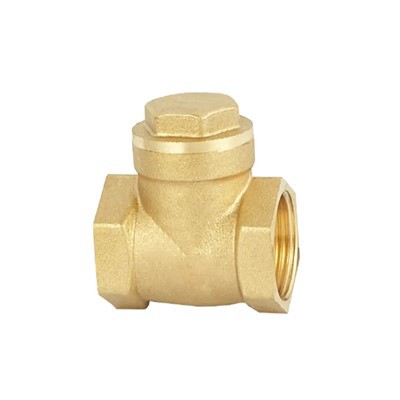


Check valves are two-port valves, meaning they have two openings in the body, one for fluid to enter and the other for fluid to leave. There are various types of check valves used in a wide variety of applications. Check valves are often part of common household items. Although they are available in a wide range of sizes and costs, check valves generally are very small, simple, and inexpensive. Check valves work automatically and most are not controlled by a person or any external control; accordingly, most do not have any valve handle or stem. The bodies (external shells) of most check valves are made of plastic or metal.
Preventing Backflow
Check valves are designed to allow fluid to flow in only one direction, preventing it from flowing back when the pressure drops or the pump is turned off. This helps to protect the system from contamination and damage.
Protecting Pumps
Check valves can help to protect pumps from damage by preventing backflow when they are turned off.
Reducing Water Hammer
Water hammer is a sudden pressure surge that can occur when the flow of water is stopped abruptly. Check valves help to reduce water hammer by preventing the flow of water from reversing direction.
Improving Energy Efficiency
Check valves improve energy efficiency by preventing water from flowing back to the pump, which would require the pump to work harder to maintain the desired flow rate.
Reducing Maintenance Costs
Rubber check valves are simple devices reduce overall maintenance for water and wastewater systems.

Types of Check Valve
Spring-Loaded In-Line Check Valve
In-line spring-loaded check valves are common, easy to understand and have a simple design. When flow enters the input port of the valve, it should have enough pressure (force) to overcome the cracking pressure and the spring force. The pressure pushes the disc, opening the orifice and allowing flow to move through the valve. When the input pressure is no longer high enough or there is enough back pressure, the back pressure and spring push the disc against the orifice and seal the valve shut. The spring, along with the short travel distance for the disc, allows for a quick reaction time for closing. This valve design also prevents pressure surges in the line, preventing water hammer.
Spring-Loaded Y-Check Valve
Spring-loaded y-check valves operate similarly to in-line spring-loaded check valves. The difference is that the spring and movable disc are positioned at an angle. This creates a ‘y’ shape, hence the name of the valve. It works the same way as an in-line valve, but since the moveable components are at an angle, they can be inspected and serviced while the valve is connected to the system. These valves are larger and take up more room within the system.
Ball Check Valve
A ball check valve uses a free-floating or spring-loaded ball that rests on the sealing seat to close the orifice. The sealing seat is normally conically tapered to guide the ball into the seat and create a positive seal, thereby stopping reverse flow. When the pressure of the fluid in the inlet side exceeds the cracking pressure, the ball is dislodged from its seat, which permits flow. When the inlet pressure doesn’t exceed the cracking pressure, or there is back pressure, the ball will close with the back pressure or via the spring, effectively closing the orifice. True union ball check valves allow for easy removal and replacement of balls, eliminating the need to buy a new valve.
Diaphragm Check Valve
Diaphragm check valves consist of a rubber diaphragm that flexes open when the inlet pressure increases. As the inlet pressure increases, the diaphragm will flex open, allowing more flow. If backpressure occurs (or it is a normally closed diaphragm check valve), the diaphragm will be forced against the opening and will seal it to prevent any backflow. Diaphragm check valves are ideal for low-pressure or vacuum applications.
Lift Check Valve
A lift check valve consists of a guided disc that raises (lifts) off the valve seat to allow media flow. It requires a cracking pressure to overcome gravity and/or spring resistance. The guide keeps the disc in a vertical line to be re-seated with the correct alignment and seal.
Most commonly, lift check valves force the media to make a 90-degree turn. If there is no spring to assist in closing, mounting orientation is important to consider to ensure that the disc swings shut with gravity.


Swing Check Valve
Swing check valves are called ‘tilting-disc’ or ‘flapper’ check valves. They have a disc on a hinge (or trunnion) that swings open with an inlet pressure. The disc swings shut as the inlet pressure decreases or if there is backflow. If there is no spring to assist in closing, mounting orientation is important to consider to ensure that the disc swings shut with gravity. A dual disk or double door check valve has a central disk that is split into two semicircular doors that function independently hinged on a central pivot point. Figure 7 shows an example of a swing check valve. Read our article on swing check valves for more information.
Stop Check Valve
A stop check valve is typically a spring-loaded y-check valve or a lift check valve with a manual override feature. This allows the valve to function as a normal check valve and prevent backflow. An external mechanism can be used to maintain the valve in an open or closed state. Therefore, a stop check valve can function as two valves in one: a flow regulating valve and a backflow preventing valve. They are commonly used in power plants, boiler circulation, steam generators, turbine cooling, and safety systems.
Butterfly or Wafer Check Valves
The terms butterfly check valve and wafer check valve are often used interchangeably. They consist of a butterfly, or wafer, style disc on a hinge and a spring. The two sides open when inlet pressure overcomes the cracking pressure. When the inlet pressure decreases, or there is backflow, the spring on the hinge (or backpressure) will close the disc, effectively sealing it. This valve type allows a straight media flow with minimal obstruction. Wafer swing check valves are sleek in design and can be fitted into tight flange spaces.
Duckbill Check Valve
Duckbill valves allow flow to proceed through a soft tube of which the end has a natural flattened shape. This flattened shape resembles a duck beak, hence the name of the valve. The flow opens the flattened end of the duckbill, permitting media to pass. When pressure is removed from the inlet side, the duckbill end returns to its flattened state, cutting off the flow.
Foot Valve
A foot valve is a check valve combined with a strainer on the inlet side. The strainer prevents debris that could clog or damage something downstream from entering the check valve. This valve is installed at the end of a section of piping as its input doesn’t have a connection point. Common check valve types included in a foot valve are in-line spring assisted or an in-line ball check valve. They are typically installed at the end of a pump suction line of a water well, fuel tank, or any other application where the suction line is situated below the pump. They can be used to keep pumps primed, prevent liquid from siphoning back, and keep debris out of the line.
Dual Plate Check Valve
A dual plate check valve has two spring-loaded plates mounted on a central pin. This design prevents slamming and water hammer effectively.

Uses of Check Valve
Prevents Backflow
The primary function of a check valve is to prevent the backflow of fluids in a piping system. It ensures that the flow of fluid occurs in one direction only, effectively blocking reverse flow. This is especially important in situations where backflow could cause damage, contamination, or interference with the intended flow direction.
Protects Equipment and Systems
Check valves help safeguard equipment and systems by preventing potential damage caused by reverse flow. They act as a barrier, preventing fluids from flowing back and causing issues such as pump damage, pipe collapse, water hammer, or contamination of sensitive components.
Maintains Pressure
Check valves assist in maintaining optimal pressure levels within a system. By allowing fluid to flow in the desired direction and preventing backflow, they help maintain the desired pressure conditions, ensuring efficient operation of pumps, regulators, and other pressure-sensitive equipment.
Enhances System Efficiency
Check valves contribute to the overall efficiency of a system. By preventing reverse flow, they eliminate the need for additional pumps or mechanisms to counteract backflow, thereby reducing energy consumption and operational costs.
Minimizes Water Hammer
Water hammer, characterized by sudden pressure surges or shockwaves in a system, can lead to pipe damage and system failure. Check valves help mitigate water hammer by preventing reverse flow and the subsequent pressure spikes that can occur.
Allows for System Isolation and Maintenance
Check valves provide a means of isolating sections of a system for maintenance or repairs. By closing off the valve, the flow of fluids can be stopped in a specific direction, allowing for safe and efficient maintenance procedures.
Applications of Check Valve
Pharmaceutical: The pharmaceutical industry requires check valves for the movement of fluids. Check valves regulate the pressure in the fluid flow for product quality, efficiency, and production. Only sanitary check valves can be used for this process. They require easy cleaning, without the need for disassembly, and silent closing with a tight shut off.
Aircraft Hydraulic Systems: Orifice check valves are used in the hydraulics of the landing gear actuator system. When the gear is raised, fluid flows to lift the gear. When the gear is lowered, the check valve stops the gear from dropping by controlling the flow out of the actuator. Aside from the landing gear, check valves on aircraft are used in other hydraulic systems as well as fuel and pneumatic systems.
Irrigation Systems: In an irrigation system, check valves are located near the source of the system to prevent backflow, siphonage, of irrigation water back to the source.
Fuel Pump: Check valves are found in vehicles that were made before the invention of the electronic injection system. Old car fuel pumps have a check valve located at the pump‘s inlet and one at the outlet, They are designed to force the fuel to flow in the correct direction. When the check valve goes bad, the fuel pressure goes down.
Water Supply Check Valves: Water in a home should only move from the supply line and out through a fixture or from a drain to the sewer. Check valves are located in homes to prevent cross connection or backflow. They come in several varieties including ball and swing check valves. Domestic check valves can be seen below on a diagram of a hot water system for a home.
Heating Boiler: Check valves on heating boilers prevent hot water from circulating when the thermostat is not calling for heat. They stop water from going back into the boiler, which would build up excessive pressure. In a home heating boiler, a check valve keeps boiler water from entering the domestic supply to keep it from being used for drinking, bathing, or cooking.
Liquid Fuel: Liquid fuel check valves are designed to operate with several different types of fuels including jet fuels, hydraulic oil, synthetic oil, and air. They are designed to provide stable operation from the crack of the valve to full flow. An inverted spool is used that has a built in pressure sensor to ensure balance and stability and holds a specific delta pressure in the valve. The total design allows the valve to open uniformly.
The Considerations for Buying
Application
A check valve may be used as a wastewater check valve or sewage check valve, chemical check valve, or water check valve, among other applications. The application determines the design and mode of operation of the selected valve. For example, ball valves are suitable for wastewater treatment as they do not interfere with the flow. However, they perform poorly in chemical mixing applications due to slow shutoff speeds.
Cracking Pressure Or Minimum Operating Pressure
It is imperative to install a properly-sized check valve with the appropriate cracking pressure. If the valve's cracking pressure is excessive, the flowing media may not be able to open it. On the other hand, the check valve would not be functional if the cracking pressure is insufficient.
Size
Valves are available in numerous sizes. Of course, the selected check valve's size must fit the sizes of the pipes and other associated equipment.
Orientation
Check valves are designed to be installed vertically or horizontally and cannot be installed in an orientation other than the intended one. Note the installation that your piping system requires before selecting a valve.
Material
The check valve material, both valve body and seating, must be compatible with the flowing media. Check valves may be made of ductile iron, stainless steel, brass, polypropylene, polyvinyl chloride, etc., and material compatibility is vital. Hawle's check valves are made of ductile iron and come with a GSK-certified high-quality epoxy coating that provides corrosion resistance.
Operating Conditions (Temperature, Pressure, Moisture, Etc.)
Different check valve builds and materials are designed for different operating pressure, temperature, and flow velocity levels. Careful consideration of these factors is crucial to selecting the correct valve type.
Costs
The initial purchase, the assembly, the maintenance, and the running costs must be considered before selecting a check valve. Cost is usually an important consideration, ranking just after quality and functionality. Note, however, that low purchase costs can bring high running/maintenance costs. Also, a cheap check valve failing to perform its duty can cause serious problems at the pumping station.
Our Factory
Qishang has become a professional and modernized enterprise producing valves and fittings. We place priority on customers' needs and product quality and look forward to cooperating with customers all over the world on the basis of mutual benefit.


Our Certificate
We have Alibaba Quality factory certification, as an honest and trustworthy unit, and quality product certification.


Contact Us
Frequently Asked Questions
Q: How does a check valve work?
A check valve requires a minimum upstream pressure (pressure differential between inlet and outlet) to open the valve and pass the media through it. This minimum upstream pressure at which the valve opens is called the check valve's ‘cracking pressure.’ The specific cracking pressure changes based on the valve design and size, so ensure that the system’s pressure can generate the cracking pressure of the chosen check valve(s).
Closing
If the upstream pressure falls below the cracking pressure or there is back pressure (flow attempting to move from the outlet to the inlet), the check valve will close. Typically, check valves have a gate, ball, diaphragm, or disc that is pressed against a seal to close the check valve. Gravity or spring can assist the closing process. As the inlet pressure decreases below the cracking pressure or there is backpressure, the valve closes by gravity, spring, and/or by using the backpressure.
Installation orientation
As a one-way valve only allows flow in one direction, it is crucial to know the correctinstallation orientation. Typically, an arrow on the valve’s housing indicates the flow direction. If there isn’t an arrow, examine the valve to ensure it is installed in the intended flow direction. If the valve is installed backward, media will not be able to move through the system, and the resulting pressure build-up can cause damage.
Normally open and normally closed check valves
A normally open check valve allows the medium to flow freely but shuts off the flow in case of backflow. A normally closed check valve prevents the flow of media through it until the cracking pressure builds up, at which point the valve opens.
Q: What materials is the Check Valve made of?
Brass check valves are excellent for air, water, oil, or fuel applications. However, they are not resistant to seawater, purified water, or chlorinated water. They are less resistant to heat and corrosion compared to stainless steel and are typically used for applications with low pressure.
Stainless steel check valve
Stainless steel check valves have superior resistance against corrosion, heat, and low temperature and have excellent mechanical properties. For applications that don’t require high durability or resistance, stainless steel is typically not a cost-effective solution compared to PVC or brass check valves. Stainless steel wafer check valves are typically high-quality check valves used for high-temperature and high-pressure applications.
PVC (Polyvinyl Chloride) check valve
Plastic check valves like PVC or CPVC are frequently used in irrigation and water management systems. They are corrosion resistant to most corrosive media like seawater, acids, bases, chloride solutions, and organic solvents. However, they are not immune to aromatic and chlorinated hydrocarbons and typically have a max temperature resistance of around 60°C.
Polypropylene (PP) check valve
Polypropylene check valves are used for water, aggressive media, and liquid food products. They are resistant to most corrosive media like inorganic acids, bases, and aqueous solutions that rapidly corrode metals. However, they are not resistant to concentrated acids and oxidizing agents and typically have a max temperature resistance of around 80°C.
Cast iron check valves
Cast iron check valves are typically used as high-temperature check valves. Cast iron is extremely strong and is immune to vibrations. The material has excellent resistance to wear and tear and temperature tolerance. But cast iron is not ductile in nature. Hence, any bending can cause the cast iron material to crack and become useless. Cast iron can work at higher temperatures when compared to PVC but gets corroded over time. These valves find applications in sugar industries, paper industries, and oil lubrication systems.
Q: Where is Check Valve used?
To protect equipment downstream from backflow damage
To prevent contamination due to reverse flow
To prevent siphoning
To keep a vacuum seal
Due to their function, they are used in almost every industry. They are used on common household appliances, like dishwashers, washing machines, and wastewater lines. For industrial purposes, they are used on boilers, furnaces, gas systems, pumping applications, or vacuum systems. They are also frequently used as aquarium check valves on water and CO2 lines. Also, a miniature check valve is a popular choice where the space is limited, yet a reliable operation is essential. Two of the most common check valve applications are for water and air, which are discussed in more depth below.
Check valves for water
A water check valve is used in numerous water applications, like drinking water and wastewater. These valves are simply called one-way water valves. For drinking water applications, they ensure that no media from the environment (outlet side of the valve) can enter the system with the safe, clean drinking water and contaminate it. For wastewater applications, they ensure that the waste water cannot re-enter the system and cause an overflow or additional contamination. For water pumping applications, a foot valve is often used to ensure no debris will enter the line and to keep internal pressure for priming purposes. Duckbill valves can also be used for discharges on water lines. Sump pump check valves ensure that the discharged water does not come back into the sump pump with gravity when the pump is turned off.
Pneumatic check valve
A pneumatic check valve, or air check valve, allows airflow and prevents it from going out. They are often simply called one-way air valves. The most common application is for an air compressor. A pneumatic check valve allows the compressor to keep certain parts pressurized and other parts de-pressurized. They can be located on an air receiver, discharge pipe, or as a piston check valve on the piston compressor's inlet and outlet sides.
Q: What materials are used to make Check Valve?
Chlorinated Polyvinyl Chloride (CPVC): CPVC has the same qualities as PVC but is able to endure high temperature applications.
Bronze: Bronze can be used for low and medium pressure applications, be cast in complex configurations, and is corrosion resistant.
Brass: Brass has the same abilities as bronze as well as the same machinability and is less expensive than bronze.
Cast Iron:Cast iron check valves are used for hot and cold water, HVAC, steam, gas, and utility services due to its excellent corrosion resistance.
Ductile Iron:Ductile iron has more than 3% carbon so it can be bent and shaped easily. It is stronger than cast iron and is easier to form into check valves.
Iron: Iron is used for steam, water, oil, and gas applications. It can endure a wide range of temperatures and pressures. Its excellent performance balances its high cost.
Stainless Steel: Stainless steel is corrosion resistant, durable, and can be used in harsh conditions, including chemical applications.
Polypropylene (PP):PP is used to make check valves due to its exceptional resistance to corrosion, which is superior to CPVC and PVC.
Polyvinylidene Difluoride (PVDF):PVDF plastic is used in applications where exceptional purity and resistance to acids, solvents, and hydrocarbons are a necessity.
Cast Steel:Cast steel is used to produce check valves due to its sudden impact resistance without deforming, breaking, or bending. It can also be easily shaped to any type of check valve.
Q: What are the common problems when using Check Valve?
Water hammer is caused by a pressure surge when there is a sudden stop in the flow of a gas or fluid and the valve suddenly closes, which causes noise and vibrations. Water hammer can damage the system and lead to costly repairs.
Water hammer can be prevented by having faster closing check valves, which stops pressure surges and shock waves. Silent check valves are one possible solution.
Reverse Flow
Reverse flow is costly and can damage a pump by causing it to spin backwards. This problem can be corrected with tight fitting fast closing check valves. One of the benefits of spring assisted check valves is their ability to react quickly and prevent reverse flow.
Oversizing
Some check valve systems have chattering caused by repeated opening and closing of the valve. This is caused by oversizing of the check valve. When installing a check valve, it has to be sized to fit the application. The disc has to be stable in the open position and make a complete seal when closed, which can prevent repeated opening and closing, fluttering, and failure of the check valve.
Installation
Incorrect installation and assembly of a check valve can cause future problems. The first step is to choose the correct check valve for the application. Flow capacity, positioning, and orientation are crucial factors since installing a check valve too close to a pump can cause turbidity and possible damage to the check valve.
Check valves should be mounted several straight pipe diameters upstream from circulators, elbows, tees, and strainers to prevent turbulence and rattling of the disc against the seat.
Q: What is the ideal check valve?
Check valve internals are flow sensitive, unlike on/off control valves. If there is not enough flow and pressure to fully open the check valve, trim chatter occurs inside the valve. This results in premature wear, potential for failure and a higher pressure drop than calculated.
Whenever a metal part rubs against another metal part, wear is a result. That leads to eventual failure of the component itself. A component failure can result in the valve not performing its function, which in the case of a check valve is to prevent reverse flow. In extreme cases failure could result in the component(s) escaping into the line, causing failure or nonperformance of other valves or equipment in the line.
Typically, pressure drop is calculated based on the check valve being 100% open as with on/off control valves. However, if the flow is not sufficient to achieve full open and the check valve is only partially open, the pressure drop will be higher than what’s calculated. This is due to the effective Cv of the valve being less than maximum when the check valve is partially open. In this situation, a large rated Cv actually becomes detrimental to the check valve (unlike with on/off control valves). This results in chattering of the disc and eventual failure. Such is not the case with some other valves. For example, with a gate valve that is fully open, the wedge is out of the flow path. Therefore, the flow through the valve does not affect the performance of the wedge whether that flow is low, medium or high.
Various types of check valves are available. Some of the more popular types are included below. All these can be used for clean media. As with other types of valves, specialty check valves can be found for unique applications. While no one type of valve is good for all applications, each has its advantages.
Taking time to contact the manufacturer to assist in selection can help you find the best fit. This is especially true if you are having problems with whatever type of check valve is presently installed.
Q: What are the common types of Check Valve?
Swing check valves
A swing check valve is built with a disc hinged, at one edge, to the valve body. When fluid flows into the valve with sufficient pressure, it forces open the disc, allowing flow. The disc shuts off when there is reverse flow or when the inflow pressure is no longer sufficient. These valves are suitable as water check valves and are widely used in water distribution systems.
Tilting disc check valves
These valves are built with a double-eccentric disc and are usually designed to be installed between two flanges. They are suitable for large diameter flow and require relatively high pressure to open. Tilting disc check valves are not suitable as wastewater check valves as debris can get stuck in the portions of the valve that are in the flow path.
Ball check valves
Ball check valves feature a ball as the closing mechanism. The inflow pressure lifts the ball off its seat and into a dedicated chamber. When the inflow pressure drops, the ball returns to its seat, shutting off the flow and preventing reverse flow. A ball check valve will perform excellently as a sewage check valve because the closing mechanism doesn't interfere with the flow in the open position.
Foot valves
Foot valves are commonly used in water pumping lines to prevent water from draining in the event of a pump stop. They are installed in the pump's suction line and usually feature a screen that filters out debris from the reservoir. This feature makes the foot valve a suitable check valve for pump applications. Since this valve type works with gravity, the installation must be vertical in the pipeline.
Axial Silent Check valves
These valves close with the help of a spring. Axial silent check valves are fast closing valves and prevent pumps from rotating in the reverse direction when the backflow occurs, as this can damage the pump.
Q: What To Consider When Selecting a Check Valve?
Flow Rate and Pressure Drop Considerations
One of the primary things to consider when selecting a check valve is the flow rate and pressure drop of the fluid. The type of check valve selected should be able to handle the anticipated flow rate and pressure drop while minimizing head loss.
Material Selection Considerations
The material of the check valve is also an important factor, as it affects the compatibility of the valve with the fluid being transported. In addition, different materials have different chemical resistance and durability properties, and the selected material should be able to withstand the specific environment and conditions of the application.
Temperature and Pressure Limitations
Check valves also have specific temperature and pressure limitations that must be considered when selecting a valve. The valve should be able to withstand the maximum temperature and pressure of the fluid without failure or damage.
Installation, Maintenance, and Cost Considerations
Finally, when choosing a check valve, it’s important to account for the initial purchase cost, assembly expenses, maintenance fees, and ongoing running costs. Cost is typically a significant factor, following quality and functionality. While low purchase prices may seem attractive, they can result in high maintenance and running expenses. Also, a low-cost check valve that fails to perform its intended function can cause serious issues at a pumping station.
Check valves must be installed properly to ensure optimal performance and prevent failure. Certain types of check valves may require expensive modifications to the pipeline, which can increase assembly costs. Maintenance and repair expenses also tend to rise as the valve’s complexity increases. In some cases, complex solutions may necessitate the assistance of a professional.
Q: What is the role of Check Valve in various systems?
In hydraulic systems, a check valve performs critical functions, including:
Pressure Control: Direct-acting and pilot-operated check valves serve as pressure relief valves in hydraulic systems. Direct-acting valves use a spring that is normally closed until the system attains the valve’s cracking pressure. The higher the system pressure, the more the valve opens until it reaches the full relief valve pressure, where it is fully open. As for pilot-operated check valves, they are two-staged valves typically operating at higher pressures than their direct-acting counterparts. In the first stage, the system’s pressure must overcome a smaller spring-loaded piston to allow fluid to flow through the valve. Then, this creates a pressure drop that opens a larger piston to allow full flow through the valve at the second stage.
Pump Protection: Often, hydraulic systems utilize multiple pumps. These pumps may be on simultaneously when operating at full capacity. However, this does not occur for too long, with a few pumps operating most of the time. In these situations, check valves prevent operating pumps from moving fluid into non-operational pumps, which could damage them. Also, hydraulic systems typically use accumulators to keep the system pressurized when pumps are not operating. Check valves prevent the return of fluid to the pump, thereby avoiding backspin.
Keeping Prime: Pumps require the presence of fluid inside at all times to avoid damage. Check valves are used at both entrances and exits of pumps to ensure this.
Water Pump
A check valve performs several functions in water pumps and water distribution systems in general. To ensure that there is always water in the pump for safe starting, check valves are always located at the pump entrance and exit lines. The presence of check valves at a pump isolates it from backflow and the harmful effects of water hammer. In water treatment facilities, it is common to find check valves in a series, so that wastewater cannot reenter the system. Also, check valves prevent elements from the environment from contaminating clean water.
Boiler
Ball check valves are one of the most important components when controlling water flow from the feed pump to the boiler. As boiler pressure increases beyond the pump pressure, these valves prevent backflow from the boiler to the pump. Also, they prevent backflow when the feed pump is not in operation.
Q: What are common uses of check valves?
One of the most common uses of check valves is in pump systems where they keep fluids, gases or steam flowing in one direction. In the oil and gas industry, large check valves prevent the flow from reversing. They are often installed on the discharge end of the pump, where they automatically shut off the flow after the pump is disengaged, preventing the system from draining.
In industrial processes where gas and another material, such as an oxidizer, are mixed together in one stream, check valves are used to ensure the gas cylinders remain separate, adding a level of safety.
Check valves help maintain sanitary conditions when used in domestic applications. In sewer pipes, they allow wastewater to exit a structure while preventing it from re-entering in the event of a backup in the sewer system. Dishwashers and clothes washers use check valves to prevent contaminated water from re-entering the domestic water supply.
Water pump systems use check valves to maintain pressure when the pump is off, as well as prevent backflow. For example, on a home water heater, a check valve will prevent hot water from returning to the cold inlet waterline when there is a drop in pressure on the cold side. HVAC systems in large buildings also have check valves to control the flow of coolant through multiple floors.
Whether used in domestic or industrial applications, check valves play an important role in safeguarding equipment and maintaining performance.
Q: When To Replace Check Valves?
As mechanical check valves deteriorate, they typically give warning signs of their poor condition. For example, they may start to vibrate, emit noises or chatter and it is also possible that components may fail and be lost from the mechanism. As check valves fail reverse flows may also occur. Simply listening for fluid flow when the valve is in the closed position is indicative of leakage and a strong warning sign to act. Relatively simply measures such as minimizing debris in the line through filters and correctly lubricating check valve components can help to eliminate premature failure. However, it is also worth noting that check valves do need to be replaced on a regular basis. Products that are based on high quality and experienced engineering inevitably has a significant impact on performance with cheaper products often a false economy.
Check valves are typically a low-cost component and as such are frequently overlooked. This can be a high-risk approach given that the cost of check valve failure is significant. The potential for catastrophe is real where reverse flow can halt production or even extensively damage a facility. Consequently, where check valves begin to show any sign of trouble plant operators must promptly renew the component with a high-quality replacement.
Q: What is Meant by Check Valve Sizing?
Q: Why Size a Valve?
It can protect a system from costly failures and downtime of a production facility.
The valve lifespan can be greatly increased by reducing the risk of parts breaking off and damaging equipment downstream.
It protects the pumps that are upstream by not allowing backflow, which can cause the pump to spin in the reverse direction and cause severe damage.
It leads to better pump and compressor protection.
It results in less piping vibration.
There is a reduction in water hammer issues.
It will work in the vertical down flow direction.
Q: What are the benefits of Check Valve?
reduce down time and loss of production due to failure of unsuitable valves.
low pressure drop increases energy savings.
check valves are very effective in preventing water hammer.
eliminate chatter and reduce the possibility of sudden valve failure.
lower maintenance costs; fewer moving parts.
smaller footprint than conventional check valves.
flexibility to cope with variable flow conditions.
interchangeability with most conventional swing check valves without expensive piping modification.
As one of the most professional check valve manufacturers and suppliers in China, we're featured by quality products and competitive price. Please rest assured to wholesale cheap check valve from our factory. Contact us for OEM service.
Brass Swing Check Valve, Brass Spring Check Valve, Check Valves