

What types of actuators can be used for ball valves?
Nov 07, 2025
Hey there! As a ball valves supplier, I've been getting a lot of questions lately about what types of actuators can be used for ball valves. So, I thought I'd put together this blog post to shed some light on the topic.
First off, let's quickly understand what a ball valve is. A ball valve is a type of valve that uses a ball to control the flow of fluid. When the ball's hole is in line with the flow path, the valve is open, and when it's turned 90 degrees, the valve is closed. Now, actuators are devices that are used to open and close these ball valves. They add a level of automation and control, which can be super handy in various applications.
Manual Actuators
Let's start with the most basic type - manual actuators. These are the ones you operate by hand. They're simple, reliable, and don't require any external power source. You've probably seen them in your home plumbing system.
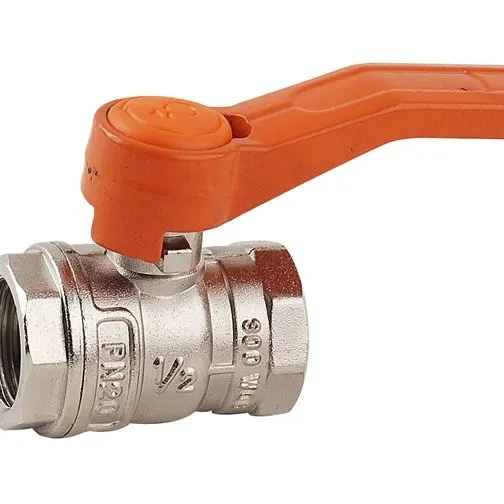
One common type of manual actuator is the lever handle. It's a simple straight or L - shaped bar that you turn to open or close the valve. It gives you direct control, and it's easy to use. For smaller ball valves, like the ones you might find in a Kitchen Ball Valve, a lever handle is a great choice. It's quick to operate, and you can easily tell if the valve is open or closed just by looking at the position of the lever.
Another manual option is the gear operator. This is useful for larger ball valves or when you need more torque to turn the valve. A gear operator uses a set of gears to multiply the force you apply. So, even if the valve is big or the pressure is high, you can still open and close it with relative ease.
Electric Actuators
Now, let's move on to electric actuators. These are powered by electricity and are a popular choice in many industrial and commercial applications.
One of the big advantages of electric actuators is their precision. You can control the opening and closing of the valve very accurately. They can be programmed to open or close at specific times or in response to certain signals. For example, in a process control system, an electric actuator can be set to open the ball valve when the pressure in a pipeline reaches a certain level.
There are different types of electric actuators. Some are quarter - turn actuators, which are perfect for ball valves because ball valves only need a 90 - degree turn to open or close. These actuators use an electric motor to turn the valve. They're relatively fast and can be used in applications where quick operation is required.

Another type is the multi - turn electric actuator. These are used for valves that require more than a 90 - degree turn. Although ball valves usually don't need this, in some special setups or for larger valves with additional components, a multi - turn electric actuator might be used.
Pneumatic Actuators
Pneumatic actuators use compressed air to operate the ball valve. They're widely used in industries where there's a ready supply of compressed air, like in manufacturing plants.
One of the main benefits of pneumatic actuators is their speed. They can open and close the valve very quickly, which is great for applications where you need rapid response times. For example, in a safety system, a pneumatic actuator can close a ball valve in a fraction of a second to prevent a dangerous situation.
Pneumatic actuators come in two main types: double - acting and spring - return. A double - acting actuator uses compressed air to both open and close the valve. You control the flow of air to the actuator to make it move in either direction. On the other hand, a spring - return actuator uses compressed air to open the valve, and a spring to close it. This is useful in situations where you want the valve to close automatically in case of a loss of air pressure.
Hydraulic Actuators
Hydraulic actuators use hydraulic fluid to operate the ball valve. They're known for their high - torque capabilities. This makes them suitable for very large ball valves or applications where there's a lot of pressure to overcome.
In a hydraulic actuator, a hydraulic pump creates pressure in the hydraulic fluid. This pressure is then used to move a piston or a cylinder, which in turn opens or closes the valve. Hydraulic actuators can generate a lot of force, but they also require a more complex setup, including a hydraulic power unit.
Selecting the Right Actuator
When it comes to choosing the right actuator for your ball valve, there are a few factors to consider.
First, think about the application. If it's a simple home plumbing application, a manual actuator might be all you need. But if it's an industrial process control system, you might need an electric or pneumatic actuator for better control and automation.
The size of the ball valve also matters. Larger valves usually require more torque to operate, so you might need a gear operator (for manual) or a more powerful electric, pneumatic, or hydraulic actuator.
Another factor is the environment. If the valve is in a hazardous area, you need to choose an actuator that's suitable for that environment. For example, in a flammable environment, you might need an explosion - proof electric or pneumatic actuator.
Our Ball Valve Offerings
At our company, we offer a wide range of ball valves, including Zinc Alloy Ball Valves and Pn40 Brass Ball Valve. We can also help you select the right actuator for your specific needs. Whether you're looking for a simple manual actuator for a small valve or a high - tech electric actuator for an industrial application, we've got you covered.
If you're in the market for ball valves and actuators, or if you have any questions about which actuator is right for your ball valve, don't hesitate to reach out. We're here to help you make the best choice for your project. Contact us today to start the conversation and let's work together to find the perfect solution for your ball valve needs.
References
- "Valve Handbook" - A comprehensive guide on valves and their operation.
- Industry standards and guidelines for ball valves and actuators.