

What is the pressure drop across a ball valve for gas?
Jul 23, 2025
What is the Pressure Drop Across a Ball Valve for Gas?
As a dedicated supplier of ball valves for gas, I've witnessed firsthand the critical role these components play in countless gas - handling systems. One of the most frequently asked questions from our customers is about the pressure drop across a ball valve for gas. In this blog, I'll delve into the concept of pressure drop, its significance in gas systems, and how it relates to our ball valves.
Understanding Pressure Drop
Pressure drop, often denoted as ΔP, is the difference in pressure between two points in a fluid - carrying system. In the context of a ball valve for gas, it refers to the reduction in gas pressure as it passes through the valve. This phenomenon occurs due to various factors, including friction, turbulence, and changes in flow area.
Friction is a major contributor to pressure drop. As the gas flows through the valve, it rubs against the internal surfaces of the valve body, the ball, and the seat. This frictional force resists the flow of gas, causing a decrease in pressure. Turbulence also plays a role. When the gas encounters sudden changes in direction or flow area within the valve, it creates eddies and swirls, which consume energy and lead to a drop in pressure.
The change in flow area is another significant factor. A ball valve has a port through which the gas flows. When the valve is fully open, the port is large, and the gas can flow relatively freely. However, as the valve is closed, the effective flow area decreases, and the gas has to squeeze through a smaller opening. This constriction increases the velocity of the gas and results in a higher pressure drop.
Significance of Pressure Drop in Gas Systems
The pressure drop across a ball valve can have several implications for gas systems. Firstly, it affects the efficiency of the system. A high pressure drop means that more energy is required to maintain the desired flow rate of gas. This can lead to increased operating costs, especially in large - scale industrial applications where gas is used extensively.
Secondly, pressure drop can impact the performance of downstream equipment. If the pressure drop is too high, the gas pressure at the outlet of the valve may be insufficient to operate other components in the system, such as regulators, burners, or sensors. This can result in reduced functionality or even failure of the equipment.
In addition, understanding the pressure drop is crucial for proper system design. Engineers need to calculate the expected pressure drop across all components in the system, including ball valves, to ensure that the system can operate within the specified pressure and flow requirements.
Factors Affecting Pressure Drop in Ball Valves for Gas
Several factors influence the pressure drop across a ball valve for gas. The size of the valve is an important consideration. Generally, larger valves have a lower pressure drop because they offer a larger flow area. For example, a Gas Ball Valve 1/2 Inch will typically have a higher pressure drop compared to a larger - sized valve when the same flow rate of gas is passing through them.
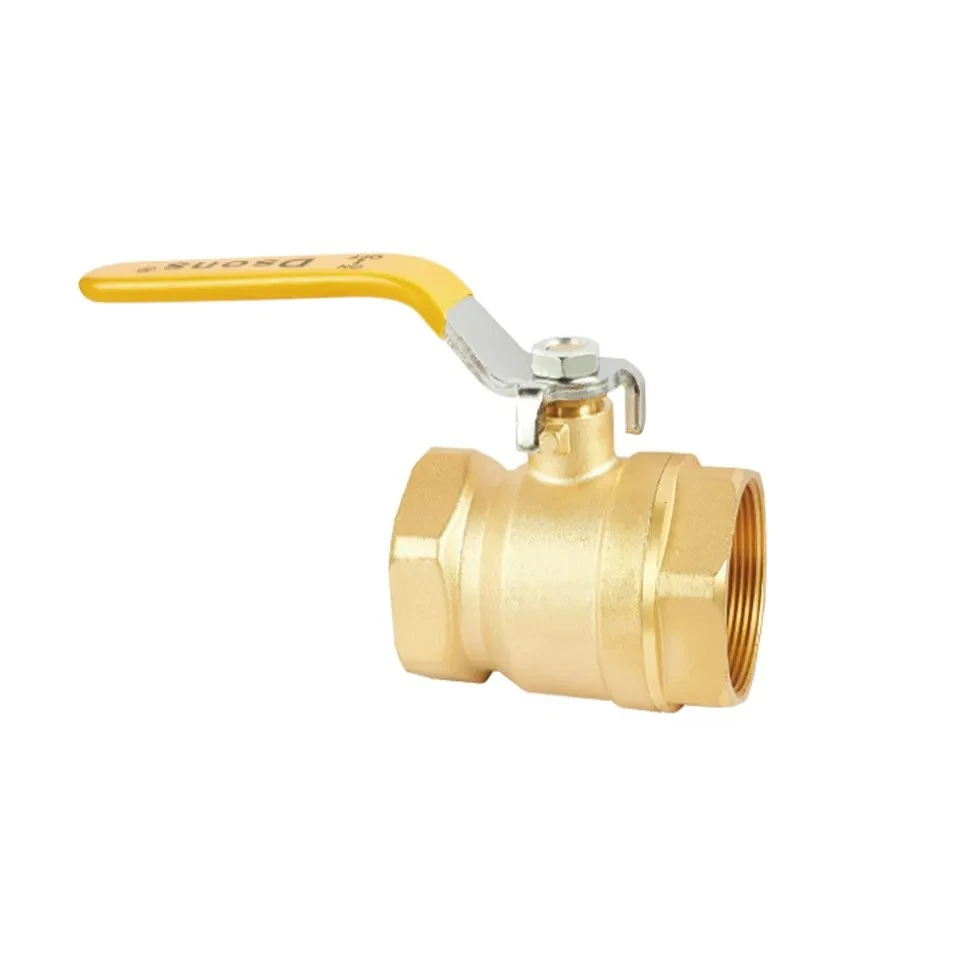
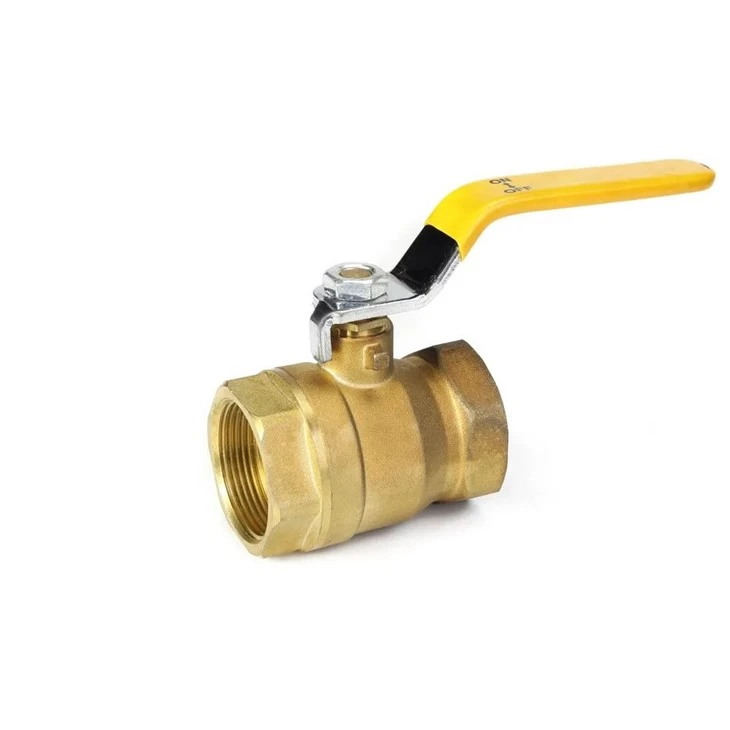
The type of valve material also matters. Different materials have different surface roughness, which affects the frictional force between the gas and the valve surfaces. For instance, Brass Ball Valves and Copper Ball Valves have different surface characteristics. Brass valves may have a slightly rougher surface compared to copper valves, which could potentially lead to a slightly higher pressure drop.
The valve's opening position is a critical factor. A fully open ball valve provides the least resistance to gas flow and thus has the lowest pressure drop. As the valve is partially closed, the pressure drop increases significantly. At a near - closed position, the pressure drop can be extremely high, and the flow rate may be severely restricted.
The properties of the gas itself, such as its density, viscosity, and flow rate, also affect the pressure drop. Gases with higher density or viscosity will generally experience a higher pressure drop. Similarly, a higher flow rate of gas will result in a greater pressure drop due to increased frictional and turbulent forces.
Measuring and Calculating Pressure Drop
Measuring the pressure drop across a ball valve can be done using pressure sensors installed upstream and downstream of the valve. These sensors can accurately measure the pressure at each point, and the difference between the two readings gives the pressure drop.
There are also theoretical methods for calculating the pressure drop. One common approach is to use the valve's flow coefficient, also known as Cv. The Cv value represents the flow capacity of the valve and is defined as the number of US gallons per minute of water at 60°F that will flow through the valve with a pressure drop of 1 psi. For gas applications, the Cv value can be used in conjunction with gas properties and flow conditions to calculate the pressure drop.
However, it's important to note that theoretical calculations are approximations, and actual pressure drop may vary due to factors such as valve wear, manufacturing tolerances, and real - world operating conditions.
Our Ball Valves and Pressure Drop
At our company, we understand the importance of minimizing pressure drop in ball valves for gas. Our Brass Ball Valves and Copper Ball Valves are designed with precision to ensure smooth internal surfaces and optimal flow paths. This helps to reduce frictional and turbulent losses, resulting in a lower pressure drop.
We carefully select the materials and manufacturing processes to ensure that our valves have consistent quality and performance. Our engineers conduct extensive testing to measure the pressure drop across our valves under various operating conditions. This allows us to provide accurate data to our customers and help them make informed decisions about valve selection.
For our Gas Ball Valve 1/2 Inch and other valve sizes, we offer detailed technical specifications that include information about the expected pressure drop. This enables our customers to design their gas systems more effectively and optimize their performance.
Conclusion
In conclusion, the pressure drop across a ball valve for gas is a complex but important phenomenon. It is influenced by factors such as valve size, material, opening position, and gas properties. Understanding and managing pressure drop is crucial for the efficiency, performance, and proper design of gas systems.
As a leading supplier of ball valves for gas, we are committed to providing high - quality valves that minimize pressure drop and meet the diverse needs of our customers. Whether you are designing a new gas system or looking to upgrade an existing one, our range of Brass Ball Valves, Copper Ball Valves, and Gas Ball Valve 1/2 Inch can offer reliable solutions.
If you have any questions about pressure drop, valve selection, or our products, we encourage you to reach out to us. Our team of experts is ready to assist you in finding the best ball valve for your gas application. Contact us today to start a procurement discussion and take the first step towards optimizing your gas system.
References
- Crane Co., "Flow of Fluids Through Valves, Fittings, and Pipe," Technical Paper No. 410.
- Perry, R. H., & Green, D. W., "Perry's Chemical Engineers' Handbook," McGraw - Hill Education.
- Miller, D. S., "Internal Flow Systems," BHRA Fluid Engineering.