

What are the flow characteristics of brass ball valves?
Dec 17, 2025
Hey there! As a supplier of brass ball valves, I'm super excited to dive into the flow characteristics of these nifty valves. Let's get started and explore what makes brass ball valves such a hot commodity in the fluid control world.
1. Basics of Brass Ball Valves
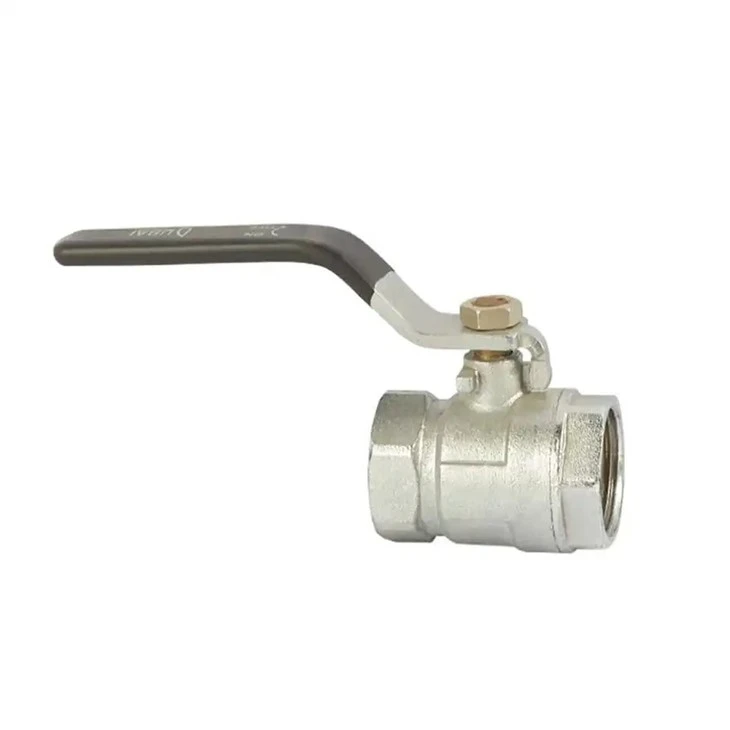
First off, let me give you a quick rundown on what brass ball valves are. They're a type of quarter - turn valve, which means you can open or close them by just turning the handle 90 degrees. The valve consists of a brass body and a ball with a hole in the middle. When the hole in the ball aligns with the flow path, the valve is open, allowing fluid to pass through. When you turn the handle, the ball rotates, and the solid part of the ball blocks the flow path, shutting off the fluid.
Brass is an excellent material for ball valves because it's corrosion - resistant, durable, and has good mechanical properties. It can handle a wide range of temperatures and pressures, making it suitable for various applications, from residential plumbing to industrial settings.
2. Flow Capacity
One of the most important flow characteristics of brass ball valves is their flow capacity. The flow capacity of a valve is typically measured in terms of Cv (flow coefficient). The higher the Cv value, the more fluid the valve can pass through at a given pressure drop.
Brass ball valves generally have a high Cv value compared to other types of valves. This is because when the valve is fully open, the hole in the ball provides a relatively unobstructed path for the fluid. The large opening allows for a high flow rate, which is crucial in applications where a lot of fluid needs to be moved quickly, like in large - scale water supply systems.
For example, in a Brass Water Ball Valve, the high flow capacity ensures that water can flow freely through the pipes without significant pressure loss. This is not only efficient but also helps in reducing energy consumption, as less energy is required to pump the water.
3. Flow Resistance
Flow resistance is another key aspect of a brass ball valve's flow characteristics. When fluid flows through a valve, it encounters resistance, which can cause a pressure drop. Minimizing this pressure drop is important for maintaining efficient fluid flow.
Brass ball valves have relatively low flow resistance. As mentioned earlier, the large opening in the ball when the valve is open allows the fluid to flow smoothly. In contrast, some other types of valves, like gate valves or globe valves, may have more complex internal structures that can cause the fluid to change direction multiple times, increasing the flow resistance.
The low flow resistance in brass ball valves means that less energy is wasted in overcoming the resistance. This is especially beneficial in long - distance piping systems or applications where the fluid needs to be pumped over a significant height.
4. Turbulence and Noise
Turbulence in fluid flow can lead to noise, vibration, and even damage to the piping system over time. When it comes to brass ball valves, the design helps to minimize turbulence.
When the valve is fully open, the straight - through flow path provided by the ball creates a laminar (smooth) flow pattern, reducing the chances of turbulence. However, when the valve is partially open, the flow can become more turbulent as the fluid is forced through a smaller opening.
To mitigate this, it's important to use the valve appropriately. In applications where there's a need to control the flow rate, it's better to use a valve that is sized correctly for the system. Using a valve that is too large can cause the valve to operate at a partially open position for most of the time, increasing turbulence.
5. Flow Control
Brass ball valves are also quite versatile when it comes to flow control. While they are often used as on - off valves (fully open or fully closed), they can also be used for throttling applications.
In throttling, the valve is adjusted to a position between fully open and fully closed to control the flow rate. However, it's worth noting that brass ball valves are not as precise as some other types of valves, like needle valves, when it comes to fine - tuned flow control.
When using a brass ball valve for throttling, the position of the ball needs to be carefully adjusted. The more the valve is throttled (i.e., the more it is closed), the more the flow rate decreases. But as mentioned earlier, throttling can also increase turbulence and flow resistance.
6. Compatibility with Different Fluids
Brass ball valves are compatible with a wide range of fluids, including water, oil, gas, and some chemicals. The corrosion - resistant nature of brass makes it suitable for use in different environments.
For water applications, Brass Water Ball Valve is a popular choice. It can handle both cold and hot water, making it ideal for residential plumbing, commercial buildings, and industrial water systems.
In the oil and gas industry, brass ball valves are used to control the flow of various hydrocarbons. They can withstand the high pressures and temperatures often associated with these applications.
However, it's important to note that while brass is generally resistant to many chemicals, there are some chemicals that can react with brass. So, before using a brass ball valve with a specific chemical, it's essential to check the compatibility.

7. Our Offerings as a Supplier
As a supplier of Brass Ball Valve, we understand the importance of these flow characteristics. We offer a wide range of brass ball valves with different sizes, pressure ratings, and end connections to meet the diverse needs of our customers.
Our valves are manufactured using high - quality brass materials and state - of - the - art manufacturing processes. This ensures that our valves have excellent flow characteristics, high durability, and reliable performance.
We also offer ODM Ball Valve services. If you have a specific requirement for a ball valve, our team of experts can work with you to design and manufacture a custom - made valve that meets your exact specifications.
8. Connect and Discuss Your Needs
If you're in the market for brass ball valves and want to learn more about how our products can meet your flow - control requirements, we'd love to hear from you. Whether you're involved in a small - scale residential project or a large - scale industrial application, our valves can provide the efficient flow control you need.
Don't hesitate to reach out and start a conversation with us. We're here to answer all your questions, provide you with detailed product information, and offer you the best solutions for your fluid - control needs.
References:
- "Valve Handbook" - This comprehensive handbook covers the basics of different types of valves, including flow characteristics and applications.
- "Industrial Fluid Flow: Theory and Practice" - This book delves deeper into fluid flow principles and how they apply to different valve types.