

How does the size of a ball valve affect its performance?
Sep 22, 2025
Hey there! As a ball valve supplier, I've seen firsthand how the size of a ball valve can have a huge impact on its performance. In this blog post, I'm gonna break down the key ways size affects a ball valve's functionality, and why it's so important to choose the right size for your specific needs.
Flow Capacity
One of the most obvious ways the size of a ball valve affects its performance is in terms of flow capacity. Simply put, larger ball valves can handle a greater volume of fluid or gas passing through them compared to smaller ones. This is because the internal diameter of the valve, known as the bore, is larger in bigger valves.
For example, let's say you're working on a project that requires a high flow rate of water, like a large - scale irrigation system. A small ball valve might restrict the flow, causing a drop in pressure and reducing the efficiency of the system. On the other hand, a larger ball valve with a bigger bore will allow the water to flow more freely, ensuring that the irrigation system functions as intended.
If you're dealing with gas applications, the same principle applies. A Ball Valve For Gas with an appropriate size is crucial for maintaining the right flow rate and pressure. If the valve is too small, it can lead to pressure build - up, which can be dangerous and may even cause the valve to fail.
Pressure Rating
Another important factor affected by the size of a ball valve is its pressure rating. Generally, larger ball valves can withstand higher pressures than smaller ones. This is because they have more material and a stronger structure to resist the force exerted by the fluid or gas under pressure.
When choosing a ball valve for a high - pressure application, such as in a hydraulic system, you need to pay close attention to the size and its corresponding pressure rating. A Hydraulic Ball Valve that is too small may not be able to handle the pressure, leading to leaks or even catastrophic failure.
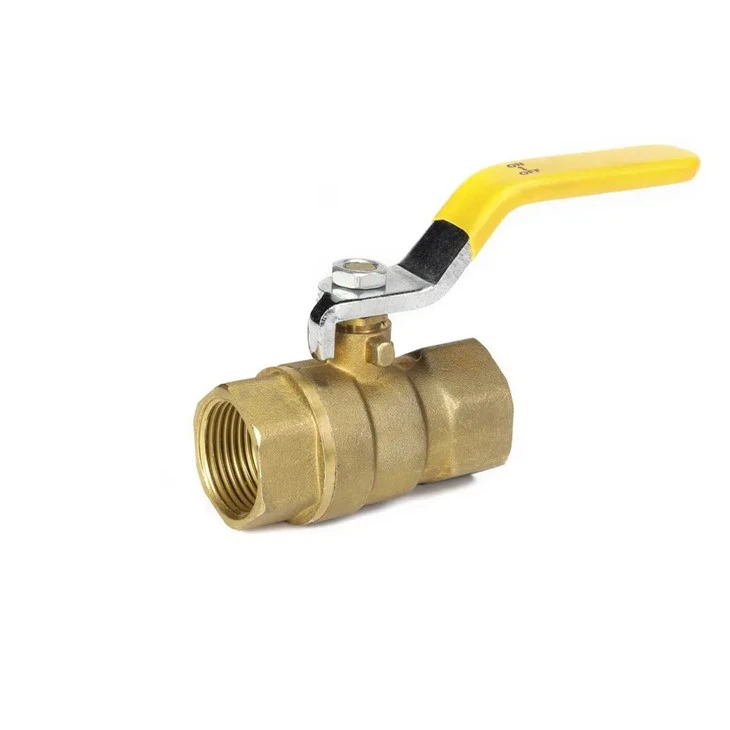

Let's take an industrial hydraulic press as an example. The ball valves in this system need to be able to handle extremely high pressures. A large - sized hydraulic ball valve will have a higher pressure rating, ensuring that it can operate safely and effectively under the intense pressure conditions of the press.
Response Time
The size of a ball valve can also influence its response time. Smaller ball valves typically have a faster response time compared to larger ones. This is because there is less volume of fluid or gas to move within the valve when it is opened or closed.
In applications where quick on - off control is required, such as in some automated processes, a smaller ball valve may be a better choice. For instance, in a chemical dosing system where precise amounts of chemicals need to be added at specific times, a Mini Zinc Alloy Ball Valve can provide a rapid response, allowing for accurate control of the chemical flow.
However, in some cases, a slower response time may not be a problem. For example, in a large - scale water distribution system, the focus is more on long - term flow control rather than rapid on - off operations. So, a larger ball valve can be used even though it has a slightly slower response time.
Installation and Space Requirements
Size also plays a significant role in the installation process and space requirements. Larger ball valves are naturally bulkier and may require more space for installation. This can be a limiting factor in applications where space is at a premium, such as in a compact machinery or a crowded utility room.
On the other hand, smaller ball valves are more compact and can be easily installed in tight spaces. They are also lighter, which can make the installation process easier and less labor - intensive.
When planning a project, you need to take into account the available space and the installation requirements. If space is limited, you may need to opt for a smaller ball valve, even if it means sacrificing some flow capacity or pressure rating.
Cost
Cost is an important consideration for any project, and the size of the ball valve can have a significant impact on the overall cost. Generally, larger ball valves are more expensive than smaller ones. This is because they require more raw materials to manufacture, and the machining and production processes may be more complex.
However, it's important to look at the big picture when considering cost. A larger, more expensive ball valve may be a better investment in the long run if it can handle the required flow and pressure, reducing the risk of system failures and costly repairs.
For example, if you choose a small, cheap ball valve for a high - flow, high - pressure application, it may fail prematurely, leading to downtime and expensive replacement costs. In this case, spending a bit more on a larger, higher - quality ball valve can save you money in the long term.
Selecting the Right Size
So, how do you go about selecting the right size of ball valve for your application? Here are some steps to follow:
- Determine the Flow Requirements: Calculate the volume of fluid or gas that needs to pass through the valve per unit of time. This will give you an idea of the minimum flow capacity required.
- Assess the Pressure Conditions: Know the maximum pressure that the valve will be subjected to. Make sure to choose a valve with a pressure rating that exceeds this value to ensure safety.
- Consider the Response Time: Decide whether a fast or slow response time is needed for your application. This will help you narrow down your choices between small and large valves.
- Evaluate the Space and Installation Constraints: Measure the available space for valve installation and consider any installation requirements, such as pipe connections and access for maintenance.
- Balance the Cost: Weigh the initial cost of the valve against the long - term benefits, including reliability and reduced maintenance costs.
As a ball valve supplier, I'm here to help you make the right choice. Whether you need a Ball Valve For Gas, a Hydraulic Ball Valve, or a Mini Zinc Alloy Ball Valve, I can provide you with the technical expertise and the right products for your specific needs.
If you're interested in purchasing ball valves or have any questions about sizing and performance, don't hesitate to reach out. I'm always happy to have a chat and help you find the perfect ball valve solution for your project.
References
- "Valve Handbook: Principles and Applications" by Leo W. Lutze
- "Fluid Mechanics and Hydraulics" textbooks for general fluid flow and pressure concepts related to valve performance.