

What is the flow coefficient of a control ball valve?
Jul 14, 2025
In the realm of fluid control systems, control ball valves play a pivotal role. As a leading supplier of control ball valves, I often encounter inquiries about various technical aspects of these valves, and one question that comes up frequently is: "What is the flow coefficient of a control ball valve?" In this blog post, I'll delve into the concept of the flow coefficient, its significance in control ball valves, and how it impacts the performance of your fluid control systems.
Understanding the Flow Coefficient
The flow coefficient, commonly denoted as Cv, is a crucial parameter that quantifies the flow capacity of a valve. It represents the number of U.S. gallons per minute (GPM) of water at 60°F that will flow through a valve with a pressure drop of 1 psi across the valve. In simpler terms, it tells you how much fluid a valve can handle under specific conditions.
Mathematically, the relationship between flow rate (Q), pressure drop (ΔP), and the flow coefficient (Cv) is given by the following equation:
[ Q = Cv \sqrt{\frac{\Delta P}{SG}} ]
Where:
- Q is the flow rate in GPM
- Cv is the flow coefficient
- ΔP is the pressure drop across the valve in psi
- SG is the specific gravity of the fluid
For water at 60°F, the specific gravity (SG) is approximately 1. So, when dealing with water, the equation simplifies to ( Q = Cv \sqrt{\Delta P} ).
Importance of the Flow Coefficient in Control Ball Valves
The flow coefficient is of utmost importance in control ball valves for several reasons:
System Design
When designing a fluid control system, engineers need to select the right valve that can handle the required flow rate at the specified pressure drop. The Cv value helps in making this selection. By knowing the flow rate and pressure drop requirements of the system, engineers can calculate the necessary Cv value and choose a control ball valve with an appropriate Cv rating.
Performance Prediction
The flow coefficient allows for accurate prediction of the valve's performance under different operating conditions. It helps in determining how the valve will respond to changes in flow rate and pressure drop, enabling engineers to optimize the system's performance and ensure efficient operation.
Energy Efficiency
Selecting a control ball valve with the correct Cv value can significantly improve the energy efficiency of the system. A valve with a Cv value that is too small for the required flow rate will cause a high pressure drop, resulting in increased energy consumption. On the other hand, a valve with a Cv value that is too large may lead to poor flow control and instability in the system.
Factors Affecting the Flow Coefficient of Control Ball Valves
Several factors can affect the flow coefficient of control ball valves:
Valve Size
The size of the valve has a direct impact on its flow coefficient. Generally, larger valves have higher Cv values as they can accommodate a greater flow rate. However, it's important to note that the relationship between valve size and Cv is not linear.
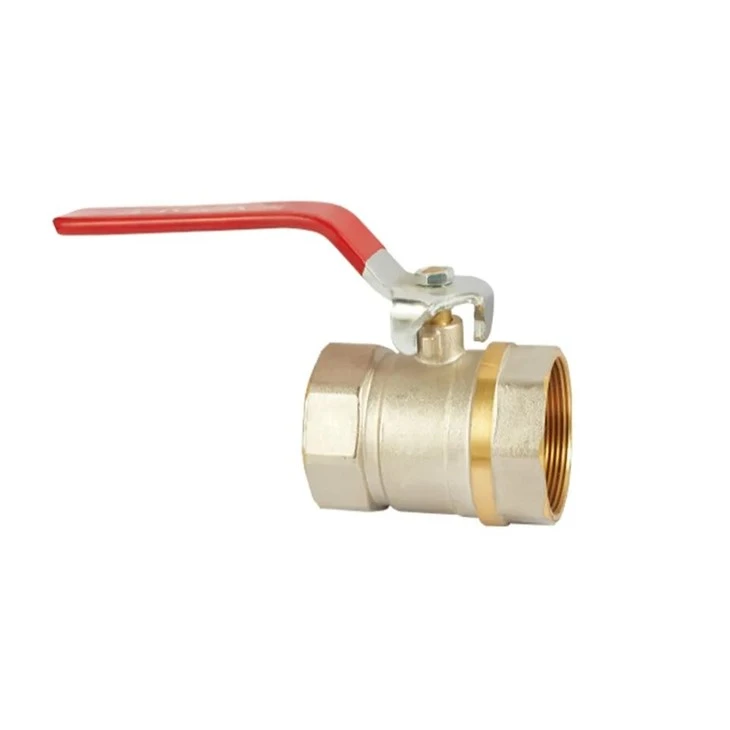

Ball Design
The design of the ball inside the valve also affects the flow coefficient. Full-port ball valves, which have a ball with a hole that is the same size as the pipe diameter, offer a lower pressure drop and higher Cv values compared to standard-port ball valves.
Valve Trim
The valve trim, including the seat and the stem, can influence the flow coefficient. A well-designed valve trim can minimize the pressure drop across the valve, resulting in a higher Cv value.
Fluid Properties
The properties of the fluid being controlled, such as viscosity and specific gravity, can affect the flow coefficient. Fluids with higher viscosities will experience a greater pressure drop for the same flow rate, which may require a valve with a higher Cv value.
Determining the Flow Coefficient of a Control Ball Valve
There are several methods for determining the flow coefficient of a control ball valve:
Manufacturer's Data
Most valve manufacturers provide the Cv values for their control ball valves in their product catalogs or technical data sheets. These values are typically determined through laboratory testing under standard conditions. When selecting a valve, it's important to refer to the manufacturer's data to ensure accurate selection.
Testing
In some cases, it may be necessary to conduct actual testing to determine the flow coefficient of a control ball valve. This can be done by measuring the flow rate and pressure drop across the valve under specific operating conditions and using the formula ( Cv = Q / \sqrt{\Delta P} ) to calculate the Cv value.
Applications of Control Ball Valves and the Role of the Flow Coefficient
Control ball valves are widely used in various industries, including oil and gas, chemical, water treatment, and HVAC. In each of these applications, the flow coefficient plays a crucial role in ensuring the proper functioning of the system.
Oil and Gas Industry
In the oil and gas industry, control ball valves are used to control the flow of crude oil, natural gas, and other fluids. The flow coefficient is important for maintaining the desired flow rate and pressure in pipelines, refineries, and production facilities. A valve with the correct Cv value can help prevent overpressure situations and ensure the safe and efficient operation of the system.
Chemical Industry
In the chemical industry, control ball valves are used to handle a wide range of chemicals, including corrosive and hazardous substances. The flow coefficient is essential for accurate dosing and mixing of chemicals, as well as for controlling the flow of reactants in chemical processes. A valve with an appropriate Cv value can help maintain the quality and consistency of the chemical products.
Water Treatment Industry
In the water treatment industry, control ball valves are used to regulate the flow of water in treatment plants, distribution systems, and wastewater treatment facilities. The flow coefficient is important for ensuring the proper treatment of water and the efficient distribution of clean water to consumers. A valve with the right Cv value can help optimize the performance of the water treatment system and reduce energy consumption.
HVAC Industry
In the HVAC industry, control ball valves are used to control the flow of heating and cooling fluids in buildings. The flow coefficient is crucial for maintaining the desired temperature and humidity levels in the building, as well as for optimizing the energy efficiency of the HVAC system. A valve with an appropriate Cv value can help ensure the comfort of the occupants and reduce energy costs.
Our Range of Control Ball Valves
As a control ball valve supplier, we offer a wide range of high-quality control ball valves to meet the diverse needs of our customers. Our product portfolio includes Copper Gas Ball Valves, Ball Valve Brass, and Zinc Copper Gas Ball Valve.
Our control ball valves are designed and manufactured to the highest standards of quality and performance. They are available in various sizes, materials, and configurations to suit different applications. Each valve is carefully tested to ensure accurate Cv values and reliable operation.
Contact Us for Procurement
If you are in the market for control ball valves, we would be delighted to assist you. Our team of experts can help you select the right valve for your specific application based on the required flow coefficient and other technical specifications. We offer competitive prices, excellent customer service, and fast delivery times.
Whether you need a single valve or a large quantity for a project, we have the resources and expertise to meet your needs. Contact us today to discuss your requirements and start the procurement process. We look forward to working with you to provide the best control ball valve solutions for your fluid control systems.
References
- Crane Co., "Flow of Fluids Through Valves, Fittings, and Pipe," Technical Paper No. 410.
- American Society of Mechanical Engineers (ASME), "Fluid Meters - Their Theory and Application," ASME MFC-3M.
- Valve Manufacturers Association of America (VMAA), "Valve Glossary and Definitions."