

How to control the flow rate with a ball valve?
Jan 05, 2026
Introduction
As a professional ball valve supplier, I've witnessed the diverse applications and benefits of ball valves in various industries. Whether it's for controlling the flow of water in a domestic setting or managing industrial fluids, ball valves are a reliable and versatile choice. One of the key aspects of using ball valves effectively is understanding how to control the flow rate. In this article, I'll delve into the principles, methods, and practical tips for controlling flow rate with ball valves.
Understanding the Basics of Ball Valves
Before we discuss flow rate control, let's briefly understand how ball valves work. A ball valve consists of a spherical disc (the ball) with a hole in the middle. When the valve is open, the hole in the ball aligns with the pipeline, allowing fluid to flow through. When the valve is closed, the ball is rotated so that the hole is perpendicular to the pipeline, blocking the flow.
The design of ball valves offers several advantages for flow control. They provide a tight seal when closed, minimizing leakage. They also have a relatively low pressure drop when fully open, which means they don't significantly impede the flow of fluid.
Factors Affecting Flow Rate in Ball Valves
Several factors influence the flow rate through a ball valve:
- Valve Opening: The most obvious factor is the degree to which the valve is opened. A fully open ball valve allows maximum flow, while a partially closed valve restricts the flow. The relationship between the valve opening and flow rate is not linear. In the initial stages of opening, a small change in the valve position can result in a significant change in flow rate. As the valve approaches full open, the change in flow rate becomes less pronounced for the same change in valve position.
- Pipe Size: The diameter of the pipeline connected to the ball valve affects the flow rate. A larger pipe diameter can accommodate a higher flow rate compared to a smaller one. When selecting a ball valve, it's important to choose a size that is compatible with the pipe diameter to ensure efficient flow.
- Pressure Differential: The difference in pressure between the inlet and outlet of the valve is another crucial factor. A higher pressure differential will result in a higher flow rate, assuming the valve is open. However, if the pressure differential is too high, it can cause issues such as cavitation, which can damage the valve and the pipeline.
- Fluid Properties: The properties of the fluid, such as viscosity and density, also impact the flow rate. Viscous fluids, like oil, flow more slowly than less viscous fluids, like water. The density of the fluid affects the pressure required to move it through the valve.
Methods of Controlling Flow Rate
Manual Control
Manual control is the simplest and most common method of controlling the flow rate with a ball valve. It involves using a handle or lever to rotate the ball inside the valve. By adjusting the position of the handle, you can control the degree of valve opening and thus the flow rate.
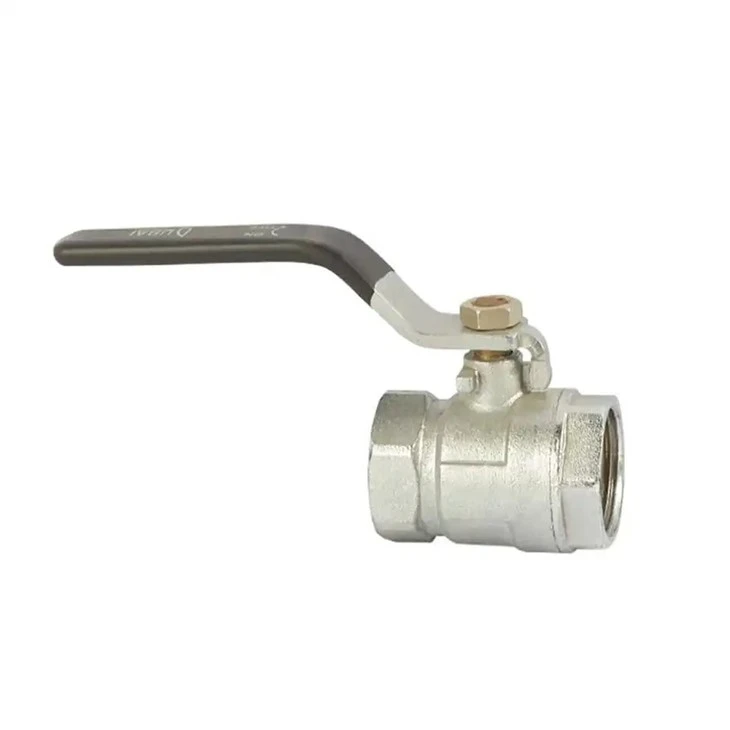

- Partial Opening: To reduce the flow rate, you can partially close the valve by turning the handle. For example, if you want to reduce the water flow in a domestic water supply line, you can turn the handle of the Brass Water Ball Valve a few degrees to restrict the opening.
- Fine-Tuning: Manual control allows for fine-tuning of the flow rate. You can make small adjustments to the valve position until you achieve the desired flow. However, it requires constant monitoring and adjustment, especially if the pressure or other conditions in the system change.
Actuated Control
For more precise and automated flow rate control, actuated ball valves can be used. Actuators are devices that can open and close the valve automatically based on a control signal. There are several types of actuators available:
- Electric Actuators: These actuators use an electric motor to rotate the ball inside the valve. They can be controlled remotely using a control system, allowing for precise and automated flow rate control. Electric actuators are suitable for applications where the flow rate needs to be adjusted frequently or where the valve is located in a hard-to-reach place.
- Pneumatic Actuators: Pneumatic actuators use compressed air to operate the valve. They are fast and reliable, making them suitable for applications where quick response times are required. Pneumatic actuators can also be integrated with a control system to achieve automated flow rate control.
Flow Control Valves with Ball Valves
In some cases, a combination of a ball valve and a flow control valve can be used to achieve more accurate flow rate control. A flow control valve is designed to maintain a constant flow rate regardless of changes in pressure or other conditions in the system. By installing a flow control valve in series with a ball valve, you can first use the ball valve to provide a coarse adjustment of the flow rate and then use the flow control valve to fine-tune and maintain the desired flow.
Practical Tips for Flow Rate Control
Proper Sizing of the Ball Valve
Choosing the right size of the ball valve is crucial for effective flow rate control. A valve that is too small will create a high pressure drop and restrict the flow, while a valve that is too large may not provide accurate flow control. When selecting a ball valve, consider the flow rate requirements of the system, the pipe size, and the pressure differential.
Regular Maintenance
Regular maintenance of the ball valve is essential to ensure optimal performance and accurate flow rate control. This includes inspecting the valve for leaks, checking the seal, and lubricating the moving parts. A well-maintained valve will operate smoothly and provide consistent flow control.
Monitoring and Adjustment
It's important to monitor the flow rate regularly and make adjustments as needed. This can be done using flow meters or other monitoring devices. If the flow rate changes due to variations in pressure, temperature, or other factors, you can adjust the valve position to maintain the desired flow.
Applications of Flow Rate Control with Ball Valves
Domestic Applications
In domestic settings, ball valves are commonly used for controlling the flow of water. For example, a Kitchen Ball Valve can be used to control the water flow to the sink or dishwasher. By adjusting the valve, you can control the amount of water used, which can help save water and reduce utility bills.
Industrial Applications
In industrial settings, ball valves are used in a wide range of applications, including chemical processing, oil and gas, and water treatment. In chemical processing, ball valves are used to control the flow of different chemicals, ensuring accurate dosing and mixing. In the oil and gas industry, ball valves are used to control the flow of crude oil, natural gas, and other fluids in pipelines and refineries.
Contact Us for Your Ball Valve Needs
If you're looking for high-quality ball valves for your flow rate control needs, we're here to help. As a leading ball valve supplier, we offer a wide range of ball valves, including Brass Ball Valve and other types, to meet your diverse requirements. Our team of experts can provide you with technical support and advice on selecting the right valve for your application. Contact us today to discuss your needs and start a successful business partnership.
References
- Crane, D. S. (1988). Flow of Fluids Through Valves, Fittings, and Pipe. Technical Paper No. 410. Crane Co.
- Fisher, R. S. (2000). Flow Control Handbook. John Wiley & Sons.
- Walas, S. M. (1990). Chemical Process Equipment: Selection and Design. Butterworth-Heinemann.