

How does the flow characteristic of an ODM Ball Valve impact the system?
Jun 20, 2025
Hey there! I'm an ODM ball valve supplier, and today I wanna chat about how the flow characteristic of an ODM ball valve impacts the system.
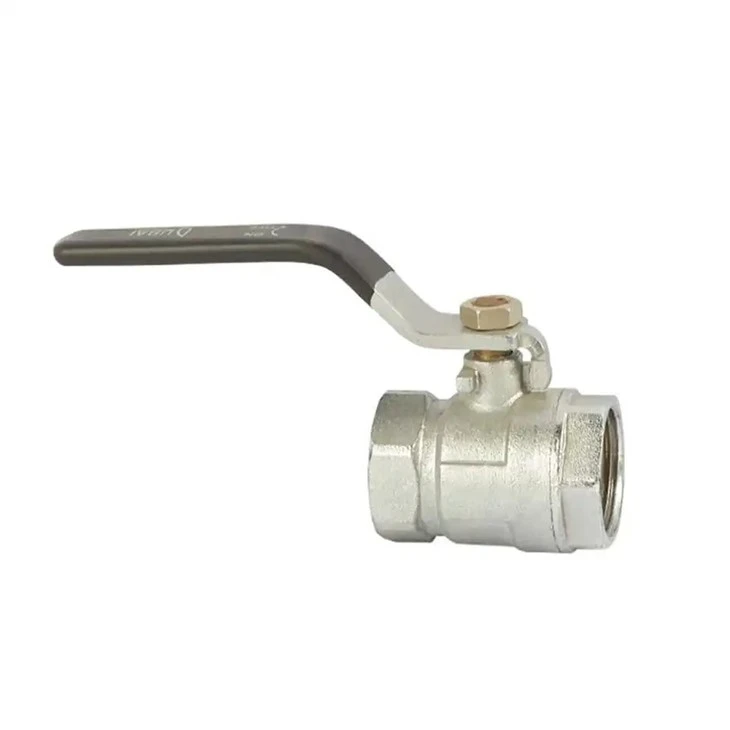
First off, let's get a basic understanding of what an ODM ball valve is. ODM stands for Original Design Manufacturer. We, as ODM suppliers, design and produce ball valves based on specific requirements from our clients. Ball valves are pretty common in fluid control systems. They use a spherical disc to control the flow of a medium. The ball has a hole, or port, through the center. When the port is in line with the flow direction, the valve is open, and fluid can pass through. When the ball is rotated 90 degrees, the port is perpendicular to the flow, and the valve is closed.
Now, let's dig into how the flow characteristic of these valves affects the system. One of the key aspects is the flow coefficient, often denoted as Cv. The Cv value represents the flow capacity of a valve. It's defined as the number of US gallons of water per minute at 60°F that will flow through a valve with a pressure drop of 1 psi. A higher Cv value means the valve can allow more fluid to pass through for a given pressure drop.
In a system where high flow rates are required, like in large - scale industrial water supply systems, a ball valve with a high Cv value is crucial. For example, if you're dealing with a water treatment plant that needs to move a large volume of water quickly through the pipes, a ball valve with a proper high Cv can ensure efficient operation. On the other hand, in a system where precise flow control is needed, such as in a chemical dosing system, a valve with a lower Cv might be more appropriate. This allows for more accurate regulation of the small amounts of chemicals being added to the process.
The flow characteristic of a ball valve also affects the pressure drop in the system. Pressure drop is the difference in pressure between the inlet and the outlet of the valve. A valve with a poor flow characteristic can cause a significant pressure drop. This is not good because it means the system has to work harder to maintain the desired flow rate. In an energy - efficient system, minimizing pressure drop is essential. For instance, in a heating or cooling system, a large pressure drop across the ball valve can increase the energy consumption of the pumps that are used to circulate the fluid.
Another important factor is the flow pattern. Ball valves can have different flow patterns, such as full - bore and reduced - bore. A full - bore ball valve has a port diameter that is the same as the inside diameter of the pipeline. This results in a straight - through flow path with minimal restrictions. As a result, the pressure drop is relatively low, and the valve can handle high flow rates without much resistance.
On the contrary, a reduced - bore ball valve has a smaller port diameter than the pipeline. While these valves are usually more compact and cost - effective, they can cause more turbulence in the flow. The reduced port size restricts the flow, leading to a higher pressure drop. However, in some systems where space is limited or the flow rate requirements are not extremely high, a reduced - bore ball valve can still be a good choice.
Now, let's talk about how the material of the ball valve can impact the flow characteristic. For example, brass ball valves are quite popular. Brass Ball Water Valve offers good corrosion resistance and durability. The smooth interior surface of a brass ball valve can help maintain a more laminar flow, reducing turbulence and pressure drop. This is especially important in water - based systems where the quality of the flow can affect the performance of other components in the system.
If you need a high - quality valve for a specific application, High Quality 1/2 Ball Valve can be a great option. These valves are designed to meet strict quality standards and can provide accurate flow control. They are often used in applications where precision is key, like in laboratory equipment or small - scale industrial processes.
Brass Water Ball Valve is also a common choice for water systems. The brass material is suitable for both cold and hot water applications, and it can handle a wide range of pressures. This makes it a versatile option for various water - related systems, from residential plumbing to commercial building water supply.
In a system with multiple ball valves, the interaction between the valves can also impact the overall flow characteristic. If the valves are not properly sized or installed, they can cause flow imbalances. For example, if one valve has a much higher Cv value than the others in a parallel configuration, most of the fluid will flow through that valve, leaving the other valves under - utilized. This can lead to inefficiencies in the system and may even cause damage to some components over time.
The flow characteristic of an ODM ball valve also has an impact on the system's response time. In a system where quick changes in flow are required, such as in an emergency shut - off system, a ball valve with a fast - acting design is essential. A well - designed ball valve can open or close rapidly, allowing for immediate control of the fluid flow. This can prevent potential disasters in systems where sudden changes in flow can have serious consequences, like in a fire suppression system.
To sum it up, the flow characteristic of an ODM ball valve plays a vital role in the performance of a system. Whether it's about achieving the right flow rate, minimizing pressure drop, ensuring a proper flow pattern, or providing quick response times, choosing the right ball valve is crucial.

If you're in the market for high - quality ODM ball valves, we'd love to have a chat with you. We have a wide range of ball valves to suit different applications and can customize them according to your specific needs. Don't hesitate to reach out to us for a purchase and start a great business partnership!
References
- "Fluid Mechanics and Thermodynamics of Turbomachinery" by S. L. Dixon
- "Valve Handbook" by Tom Chitwood